

The best pickleball machines solve a problem no partner can. A live game might give you forty dinks, maybe five resets that felt right. The shots that actually decide a match need hundreds of identical repetitions, and nobody is available to feed them to you on a Tuesday evening in February.
We spent weeks reading the spec sheets, the owner reviews and the failure reports behind the eleven best pickleball machines on the market right now. What follows is a tiered roundup that runs from an eleven-pound beginner toss to a programmable coach-grade feeder, with a buying guide, an honest buy-versus-rent section and an ownership chapter the spec sheets never mention. Every rating and review count here is copied from the listing itself, and where the review base is thin we say so instead of hiding it.
One thing up front: this is a review-poor category. Not one machine in our group has more than a few dozen ratings, and several have fewer than ten. That is a real weakness of the pickleball machine market, not of this list. We have leaned on review volume as our tie-breaker wherever ratings were close, and we flag machines whose durability is still unproven rather than presenting them as equals.
Before you read further, make sure your hardware is sorted. Our guides to the best pickleball paddles and the best pickleball shoes are the natural starting point, because a machine is only useful if you can get to the ball you are being fed.
Table of Contents
- Top 3 Best Pickleball Machines (October 2026)
- All 11 Best Pickleball Machines Side by Side in 2026
- 1. Titan ACE Pickleball Machine: The Most Complete All-Rounder
- 2. Titan ONE Pickleball Machine: Built for Clubs and Multiple Sessions
- 3. Lobster Sports Pickle Two: The Best Variable Spin Without an App
- 4. Spinshot Player Pickleball Machine: Flexible Feeding, Mixed Results
- 5. Pickleball Tutor Plus: The Knob-Only Machine for Serious Solo Work
- 6. PUSUN PP-Smart Pro: The Most App-Capable Machine in the Group
- 7. JP02 Portable Pickleball Machine: The Best Value Pick
- 8. Furlihong 3816PBH Pickleball Machine: The Best Starting Point for New Players
- 9. Posboll Ball Thrower with Net: The Backyard and Small-Space Pick
- 10. Sports Tutor Pickleball Twist: The Simplest Way to Feed Yourself
- 11. Pickleball Tutor Spin: Built Around the Spin You Actually Return
- How to Choose a Pickleball Machine in 2026
- Are Pickleball Machines Worth It? Buy vs Rent
- Ownership Realities: Ball Wear, Jamming and Total Cost
- Frequently Asked Questions
- The Best Pickleball Machine for Your Player Profile
Top 3 Best Pickleball Machines (October 2026)
Our top three come from three completely different corners of the market, and that is deliberate. One is the most capable machine with the deepest review base in the group, one is the best spin machine you can buy without touching an app, and one is the cheapest sensible way to start feeding yourself balls.

Titan ACE Pickleball Machine
- 110-ball invertible hopper
- Internal oscillation
- Free Titan Drill app
- Two-year warranty

Lobster Sports Pickle Two
- Variable topspin to backspin
- Random and two-line oscillation
- 10-60 mph
- 10-function remote
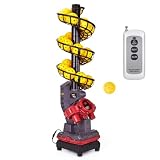
Furlihong 3816PBH Pickleball Machine
- Remote control
- Oscillating base
- Adjustable speed
- Battery or AC power
The Titan ACE earns the top spot on the strength of its review base: 56 ratings at a 4.6 average is more owner history than any other machine we could verify, and the owners who left those reviews describe drill variety, build quality and a battery that keeps going. The Lobster Pickle Two is the oldest design in the group and still the only one with genuine variable topspin-to-backspin control, driven by a physical remote that will never lose a Bluetooth connection. The Furlihong 3816PBH is the entry point: a light, quick-assembly oscillating unit that a new player can carry onto a court and start using in ten minutes.
All 11 Best Pickleball Machines Side by Side in 2026
This is the whole list at a glance. The three feature columns we lean on hardest in the buying guide are ball capacity, how the machine moves the feed around the court, and how you tell it what to do.
| Product | Specifications | Action |
|---|---|---|
| Titan ACE Pickleball Machine |
|
Check Latest Price |
 Titan ONE Pickleball Machine Titan ONE Pickleball Machine |
|
Check Latest Price |
| Lobster Sports Pickle Two |
|
Check Latest Price |
 Spinshot Player Pickleball Machine Spinshot Player Pickleball Machine |
|
Check Latest Price |
 Pickleball Tutor Plus Pickleball Tutor Plus |
|
Check Latest Price |
 PUSUN PP-Smart Pro PUSUN PP-Smart Pro |
|
Check Latest Price |
 JP02 Portable Pickleball Machine JP02 Portable Pickleball Machine |
|
Check Latest Price |
| Furlihong 3816PBH Pickleball Machine |
|
Check Latest Price |
 Posboll Ball Thrower with Net Posboll Ball Thrower with Net |
|
Check Latest Price |
 Pickleball Tutor Twist Pickleball Tutor Twist |
|
Check Latest Price |
 Pickleball Tutor Spin Pickleball Tutor Spin |
|
Check Latest Price |
1. Titan ACE Pickleball Machine: The Most Complete All-Rounder
Titan ACE Pickleball Machine with Invertible Hopper | 110-Ball Capacity, Lightweight 39 lb Design, Internal Oscillation & Free App Control for Mobile Players
110-ball invertible hopper
Internal oscillation
Free Titan Drill app
18 x 15 x 21 in, 48.5 lb
Pros
- Drill library with QR-scanned pro drills keeps sessions varied
- Internal oscillation moves the feed while the chassis stays still
- Collapsible frame folds down for storage and transport
- Two-year warranty with free over-the-air updates
Cons
- Settings and drill variables take real time to learn
- Best results need an enclosed court because wind disperses the feed
This is the machine we kept coming back to while assembling the list. The Titan ACE is the official ball machine partner of the UPA, and the spec sheet reads like it was written for coaches: a 110-ball invertible hopper, internal oscillation, and a free drill app that lets you program dinks, volleys and custom sequences from a phone.
What actually convinced us is the owner feedback rather than the brochure. Across 56 ratings averaging 4.6, the recurring theme is that sessions stop feeling repetitive because the drill library keeps changing what arrives and from where. Eighty-one percent of those ratings are five stars, which is an unusually clean distribution for a product category this young.
Control comes from four places: the app, an onboard panel, Apple Watch, and a physical remote that is sold separately. That last point matters. If you are buying this machine, budget for the remote, because it is the only one of the four that will keep working when your phone battery is flat or you are standing at the far end of the court with no signal.
The build feels substantial for a machine that folds down to 18 by 15 by 21 inches, and owners single out the battery life and the collapsible frame as the two features that made it fit their garage. The frame is 48.5 pounds, so this is a two-hand lift rather than a grab-and-go, and the telescoping handle is what makes that manageable.
How you will actually use it
Buyers describe programming a short sequence of feeds, then standing back and hitting twenty repetitions before editing anything. The internal oscillation is the feature that changes a session most, because the machine moves the launch direction without swinging its own body, so the shot looks more like a rally than a robot.
The learning curve is the honest drawback. Owners with a few sessions behind them describe the number of settings and drill variables as overwhelming at first, so give yourself two sessions before deciding the machine is complicated rather than capable.
What to check before you buy
It performs best on an enclosed or private court. That is not a defect, it is physics, and owners in open parks report balls dispersing badly in any breeze. If your only regular court is windy and open, an externally oscillating machine may frustrate you less.
Also confirm the remote is included in what you are buying, and check your storage situation against a 48.5-pound folding unit. The warranty runs two years, which is average for the group and shorter than the three years on the Sports Tutor machines.
2. Titan ONE Pickleball Machine: Built for Clubs and Multiple Sessions
Titan ONE Pickleball Machine with Internal Oscillation & Free App | for Coaches, Clubs & Solo Practice, 85 to 240 Ball Capacity, Portable with Trolley Handle
85-240 ball capacity
Internal oscillation
All-in-one hopper
22 x 14 x 31 in
Pros
- Hopper capacity is configurable from 85 to 240 balls
- All-in-one hopper holds balls rackets and a bottle
- Trolley handle makes it movable across a court
Cons
- Sold as machine only so battery and charger are not included
- Largest footprint in the group
- Only 14 ratings on record
The Titan ONE is the same engineering idea as the ACE turned up a notch, and the difference is capacity. The hopper is configurable from 85 to 240 balls, which means a coach running a group session can load once and work a room for a long time without anyone walking back to refill.
The all-in-one hopper is the sleeper feature. It stores your balls, your paddles and a water bottle in the same cavity, which sounds trivial until you have tried to run a session out of a car boot with loose gear rattling around. On a site with multiple courts, that organisation matters.
At 4.8 stars from 14 ratings, the sentiment is strongly positive, with 83 percent of those ratings at five stars. Buyers point at capacity, the trolley handle, and app-driven drill design as the three reasons they would buy it again.
How you will actually use it
This is a machine for a person who feeds other people. Solo players will not load 240 balls for a personal session, but a coach running a two-hour group session absolutely will, and the internal oscillation keeps the feed moving without the whole unit swinging across the court surface.
Programmability is the real story. The drill library with QR-scanned pro and coach drills means a session plan can be prepared at home and launched on arrival, which is exactly the workflow a club or a paid lesson needs.
What to check before you buy
Confirm what is in the box. This listing is the machine only, without battery and charger, so the full cost of ownership is higher than the headline figure suggests and you should price the missing components in before you commit.
Look at your storage and transport situation honestly. At 22 by 14 by 31 inches this is the biggest unit in our group, and it is designed to be wheeled on a trolley rather than carried up a staircase. If you have a one-car garage and a flight of steps, think hard.
3. Lobster Sports Pickle Two: The Best Variable Spin Without an App
Lobster Sports Pickle Two Pickleball Machine – Full-Featured, Auto Launcher, Spin Control, Random Oscillation, 2-Line Drill, Battery Powered, Portable, Holds 125 Balls – with 10-Function Remote
10-60 mph speed
Topspin through backspin
125-ball hopper, 42 lb
6-8 hours of court time
Pros
- Only machine in the group with true variable topspin and backspin
- Two-line oscillation plus a random horizontal sweep
- 8-inch all-terrain wheels and a folding handle
- Rechargeable battery gives 6-8 hours of court time
Cons
- Rubber throwing wheels collect plastic residue and need cleaning
- Usable hopper capacity is closer to 80 balls than advertised
- Control interface is feature-rich but not intuitive
The Lobster Pickle Two has been on sale since 2018, which in this category is an eternity, and it is still the machine we would buy for someone who refuses to run an app. Everything is done through dials and a ten-function physical remote. Nothing buffers, nothing disconnects.
Its real claim is spin. It was the first pickleball machine with variable spin running from heavy topspin through flat to heavy backspin, and no other machine in our group matches that range with manual controls. The 10-to-60 mph speed band and elevation adjustment to 50 degrees give you everything from a soft kitchen feed to a ball arriving at net height.
The oscillation is unusually flexible. Two-line oscillation alternates between two set spots and a random horizontal sweep moves the feed around the court, which is how you train hitting on the run rather than standing in one place waiting for a ball to come straight at you.
Owners on a Lobster-focused Facebook group ask repeatedly whether the Pickle or the Pickle Two is worth the step up, and the recurring answer is that the Two is the one with true spin control. That is consistent with what the 42 ratings averaging 4.4 show: buyers value the spin range, the oscillation pattern and the portability.
How you will actually use it
Spin is the whole point, so drill with it deliberately. A heavy backspin feed arriving short forces you to take the ball early, and a heavy topspin feed arriving deep forces you to get under it. Neither of those is a shot a human feeding partner will produce on demand two hundred times.
At 42 pounds with 8-inch all-terrain wheels, a folding handle and an inverting hopper, this is one of the more genuinely portable machines here. It is a two-hand lift but it rolls, and the inverting hopper means you can empty it onto the ground in seconds.
What to check before you buy
Budget for maintenance. The most common complaint among the 42 ratings is that the rubber throwing wheels collect plastic residue and need periodic cleaning, which is a five-minute job if you do it regularly and a jam if you do not.
Do not trust the hopper number. Owners report usable capacity closer to 80 balls rather than the advertised 125 to 135, and a few report control-panel or lever durability problems within the first month. Know that going in, because it changes how a session is planned.
4. Spinshot Player Pickleball Machine: Flexible Feeding, Mixed Results
Spinshot Player Pickle Ball Machine
App-controlled drill programming
Battery and AC operation
Adjustable speed, spin, elevation and placement
Random oscillation
Pros
- Wide range of speed
- spin
- elevation
- frequency and placement settings
- Hybrid battery and AC operation suits indoor and outdoor sessions
- Consistent feeds when switching between ball types
Cons
- Accuracy reports range from good to about a third of feeds off target
- App connection and drill saving reported as unreliable
- Unprotected metal trim can scratch court surfaces
The Spinshot Player straddles two worlds. It is listed in the tennis ball machine category, and it behaves like one, which means it offers a depth of placement control that almost nothing else in this list can match. Speed, spin, elevation, frequency and horizontal position are all independently adjustable, with random oscillation on top.
It also runs on hybrid battery and AC power, which is genuinely useful if you are moving between an indoor hall and an outdoor court in one session. Owners call out consistent feeds even when switching between ball types, and the battery is compatible with common UPS-style replacements, which softens the long-term replacement cost.
It is also a machine whose reviews split cleanly. At 4.1 stars from 17 ratings, some owners report excellent accuracy while others say roughly a third of balls miss the set target on their unit, and there are reports of app connection problems and long-term control-panel failures.
How you will actually use it
The placement controls make this the pick if your goal is a specific target rather than general repetition. Landing the ball in the same metre of court over and over is how you build a repeatable third-shot drop, and very few machines in this group can hold that target without you nudging them back constantly.
Treat the app as a convenience, not a dependency. The same pattern of hardware-good, software-fragile shows up across owners of app-driven machines in this category, so have a plan B for adjusting settings from the panel.
What to check before you buy
Accuracy is the variable to test for yourself, and you can only test it in person or with a clear return policy. The spread between owners is too wide to resolve from reviews alone, and this is the one machine in the group we would want a hands-on session with before recommending it to a competition player.
Watch the metal trim. Owners report it scratching court surfaces when the machine is tilted, and if you are on a private or club surface, that is your problem to manage. It also has one of the thinner warranty stories in this group at 17 ratings with mixed long-term outcomes.
5. Pickleball Tutor Plus: The Knob-Only Machine for Serious Solo Work
Pickleball Tutor Plus. Pickleball Ball Machine. Speed 10-65 MPH. Topspin/Underspin. Random Oscillator. Made in USA by #1 Pickleball Machine Company.
10-65 MPH
Topspin and underspin on one dial
Random oscillator
110-ball capacity, 35 lb
Pros
- No app or programming so drills start the moment you arrive
- Single dial for spin and a clear interval control are easy to adjust mid-session
- US-made with a three-year warranty and factory service
Cons
- Only 2 ratings on record so long-term durability is unverified
- Knob-only interface means no saved drills or landing point programming
The Pickleball Tutor Plus is built by a company that makes baseball pitching machines for a living, and the design logic shows. There is no app, no account, no drill library and no firmware. You turn a dial, you press a button, and a ball leaves the machine.
What you get for that simplicity is a 10-to-65 mph speed range, topspin and underspin on a single dial, a feed interval adjustable from every 1.5 seconds to every 10, and a random oscillator that throws shots across the court so you learn to move. It holds 110 balls and runs up to four hours per charge on an internal battery with a smart charger that shuts itself off.
It is also, on paper, the best all-round spec sheet at a mid-range price point. A 65 mph ceiling tops every other manual machine in this group, and a three-year warranty with US-based factory service in Burbank is the longest warranty coverage here.
Portability is handled properly: 35 pounds with built-in towing wheels and a handle, which is meaningfully lighter than the Titan units and the PUSUN machine.
How you will actually use it
This is the machine for a player who already knows what they want to hit. With no programming, you spend your time on repetition rather than configuration, and the random oscillator is what stops a solo session turning into an autopilot drill from a fixed spot.
Use the interval control as your intensity dial. Every 1.5 seconds is a fast rally you have to move to, and every 10 seconds is a reset drill where you can reset your feet properly between shots.
What to check before you buy
Be honest about the evidence. This machine has two ratings on record, both five stars, which tells you two people were happy and tells you nothing at all about how it holds up after three seasons. If durability over time matters to you, weigh that against the Sports Tutor machines’ warranty terms and the much deeper review base of the Titan and Lobster options.
Confirm the no-app stance is acceptable to you. If you want to program a landing point, set a drill sequence or get a push notification when the machine is ready, this machine will not do it and never will, because that is the design.
6. PUSUN PP-Smart Pro: The Most App-Capable Machine in the Group
PUSUN Smart Pickleball Machine PP-Smart-Pro – APP Controlled Auto Feed, 10 Training Modes, 85 Ball Capacity, 4-6Hr Battery Life, Suitable for All Level Players(White)
10 preset modes and 20 landing points
85+ ball hopper
4-6 hour lithium battery
13.5 x 17.2 x 26.6 in, 48 lb
Pros
- Most comprehensive app mode set at this tier
- Internal oscillation keeps the machine body still
- Consistent placement with no jams reported over roughly 1500 balls
- External battery makes charging easier
Cons
- App is still branded for tennis and displays speed only in km/h
- Random mode spreads more horizontally than in depth
- Balls can jam against the rubber wheels and wear quickly
The PP-Smart Pro is the only machine in this list where the app is the product. Ten preset training modes cover dinks, volleys, drives and smashes, and there are 20 precise landing points with 20-gear vertical and 30-gear horizontal adjustment. If you want a phone to design a session and the machine to execute it, this is the one.
Mechanically it is serious. Speed runs from 20 to 120 km/h with 2.5-second speed variation, internal oscillation keeps the body stationary on court while the launch head moves, and a ball-path memory function can recall and repeat a route. Maximum serving distance of 20 metres lines up neatly with pickleball court dimensions rather than overshooting into the next court.
Owners rate it 4.4 from 18 ratings, with 73 percent at five stars. The most useful line in that feedback is that one owner put roughly 1,500 balls through it without a jam, which suggests the feed reliability people worry about most in this category is not a problem here.
One detail worth planning around: the battery is external, which makes charging easier and keeps the machine lighter to carry, but it is also a component you will eventually have to source separately.
How you will actually use it
Use the twenty landing points to build drills, not just to aim. Pick one target, hit fifty, and only then change it. The vertical and horizontal gear counts give you fine enough control to move a target a few inches at a time, which is how you tighten a third-shot drop by centimetres rather than metres.
Watch the speed units carefully. This app is still tennis-branded and displays speed in km/h, so converting to the mph figures used elsewhere in this guide takes a moment every session. It is a small irritation that never goes away.
What to check before you buy
Two reported quirks deserve a test. The random mode spreads more horizontally than in depth, so it behaves more like a cross-court mode than a fully random one, and some owners report balls jamming against the rubber wheels and wearing quickly at the feed point.
Warranty handling has been reported as slow and largely self-service, video based. For a machine at this level that is the part to read the terms of carefully before you buy, not the two-year headline.
7. JP02 Portable Pickleball Machine: The Best Value Pick
JP02 Portable Pickleball Machine – Swing,Spin Multiple Serve Modes Pickleball Trainer,Ball Thrower for Practice,Adjustable Speed, Elevation, and Frequency Pickleball Launcher
Up to 30 mph
0-70 degree elevation
Side-to-side oscillation
Folds to 14 x 12 x 19 in, 22 lb
Pros
- Folded size fits easily in a car boot
- Lightweight 22-pound body with wheels and a telescopic pull rod
- Detachable battery charges inside or outside the machine
- Two-year warranty
Cons
- 30 mph top speed is well below the high-end machines
- Two-wheel design cannot generate heavy topspin
- External oscillation swings the whole frame rather than just the head
The JP02 is the most sensible mid-range buy in this list, and it has the second-deepest review base we could verify at 36 ratings averaging 4.4. It is a straightforward external-oscillation machine: adjustable speed up to 30 mph, elevation from 0 to 70 degrees, adjustable topspin and backspin levels, and a two-wheel feed.
What it gets right is transport. It folds to 14 by 12 by 19 inches, weighs 22 pounds, and has large moving wheels and a telescopic pull rod, so you can walk it from a car to a court without a second trip. The detachable lithium battery is a nice detail because it can charge inside or outside the machine.
Owners treat it as a portable entry-level trainer rather than a rally simulator, and that is the honest characterisation. The gentle two-wheel feed is deliberately easy to return, which is exactly what a developing player needs and exactly what a competitive player does not.
How you will actually use it
Set it at one end and work on getting behind the ball. At 30 mph with a 0-to-70 degree elevation range, the useful shots are a soft feed you can volley and a mid-height drive, and the oscillation moves that feed across the court so you practise moving rather than planting.
For anyone learning the basics, the gentleness is a feature. A machine that does not blast balls at you while you are still learning to ready position is worth more than one with a higher ceiling you cannot handle.
What to check before you buy
Know the speed ceiling before you get excited. Thirty miles per hour cannot produce a simulated rally, so if your goal is to train defending against hard, deep balls, this is the wrong machine and you will notice within two sessions.
Understand what external oscillation means in practice. The whole frame swings, so the machine’s base moves across the court surface and the feed pattern is wider and less precise than an internal mechanism. Make sure your court surface can take it.
8. Furlihong 3816PBH Pickleball Machine: The Best Starting Point for New Players
Furlihong 3816PBH Pickleball Machine with Remote Control
Remote control
Oscillating base
Auto swing launch port
Battery or AC power, 4.4 kg
Pros
- Assembles in about ten minutes with a pre-built base
- Remote control changes settings without walking back to the machine
- Runs on batteries or the included AC adapter
- Carry bag included and tripod compatible
Cons
- Ball rack is less sturdy than expected
- No remote control for feed interval timing
- Modest maximum output for advanced fast-ball drills
The Furlihong 3816PBH is the machine we would hand someone who has never used a ball launcher before. It arrives as a kit with a carry bag, a remote, ball tracks, a top track, a swing base and an AC adapter, and it assembles in roughly ten minutes because the base is pre-built.
Its rating is 4.8 from 19 ratings with 82 percent at five stars, which is the second-cleanest distribution in the group, and the feedback comes from an unusually broad set of users including school and youth programmes. The most-cited features are the remote, the oscillating base and the dual power options.
The mechanics are simple in a good way. An oscillating base moves the feed randomly side to side, an auto up-and-down swing launch port handles the height with a side button to hold a specific angle, and speed runs from low to high. It is also tripod compatible for height adjustment, though a tripod is not included.
It is not a pickleball-only device. Owners use it as a soft-toss feeder for youth baseball and softball, which is a nice return on a machine that mostly sits in a garage between sessions.
How you will actually use it
Bring it to a court, not a field. At 4.4 kg in the package this is the easiest machine here to load into a car solo, and ten minutes of assembly is short enough that you will actually do it rather than leave it in the boot.
Use the oscillating base for reaction work. Random side-to-side placement is what forces you to move your feet, and for a new player building court positioning that is a more valuable lesson than a consistent feed to the same spot.
What to check before you buy
The remote does not control feed interval. That is the single most requested missing feature in the reviews, and if your plan involves drills with a specific rest between balls you will be walking back to the machine each time. The warranty is also the thinnest in this group at twelve months.
Check the ball rack and the output ceiling. Owners describe the rack as less sturdy than expected, and the maximum power output is modest for anything resembling an advanced fast-ball drill. For fundamentals, dinks and early volleys, none of that matters.
9. Posboll Ball Thrower with Net: The Backyard and Small-Space Pick
Posboll Pickleball Machine Ball Thrower, All-in-One Pickleball Launcher
Includes a return net
5200mAh battery, 6-8 hours
Adjustable distance and height
28-ball hopper, 22 lb
Pros
- Bundled return net removes ball collection from solo sessions
- 6-8 hour built-in battery means no court fees or charging gaps
- Quick 15-minute assembly at 22 pounds
- Doubles as a tennis ball machine
Cons
- Hopper capacity of 28 balls is small compared with the group
- Throw distance capped at about 9 feet
- No listed warranty
Ball chasing is the quiet tax on machine ownership. You spend twenty minutes feeding balls in one direction and twenty minutes walking after them, and by the end of a session you have done less hitting than you planned. The Posboll solves that by including a return net with the machine.
Everything else about it is built around a small space. Shot distance adjusts up to about nine feet, height to seven feet, with left-right oscillation from the remote. The 7-track hopper holds 28 pickleballs or 30 tennis balls, and the built-in 5200mAh battery runs six to eight hours on one charge.
It assembles in about 15 minutes, weighs 22 pounds, and comes in at 26 by 13 by 12 inches. It also throws tennis balls, and there is a free scoring app bundled with it, which is an odd but genuine bonus for family and group sessions.
How you will actually use it
It is a dink and volley trainer, not a rally machine. A nine-foot throw puts the ball right in front of you at the kitchen, which is precisely where soft-game practice happens, so aim it at a net or a partner and run short exchanges.
Because the net catches the balls, you can keep the entire session inside a driveway or a small garden court. That changes what a machine is for entirely, because you no longer need a full court to justify owning one.
What to check before you buy
There is no listed warranty on this one, and that is the single biggest difference between it and the rest of the group. Every other machine here carries at least twelve months, several carry three years, so factor the higher risk of an electronics failure into your decision.
Accept the 28-ball hopper and the short throw before you buy, not after. If your plan was to simulate a feed from the baseline, this machine physically cannot do it, and no amount of adjustment will change that.
10. Sports Tutor Pickleball Twist: The Simplest Way to Feed Yourself
Sports Tutor Pickleball Twist Ball Machine – for Beginners – Battery Powered. Adjustable Toss. Made in USA by #1 Pickleball Machine Company
12-20 foot adjustable toss
One ball every five seconds
28-ball capacity
11 pounds, battery powered
Pros
- Throws to the same spot every time which is what stroke work needs
- No oscillation or spin settings to learn
- 11-pound body with a built-in carrying handle
- Three-year warranty with US factory service
Cons
- Basic only with no oscillation spin or interval control
- Single review on record gives no basis for judging durability
The Pickleball Tutor Twist is the simplest machine in this guide and the easiest to justify. It weighs 11 pounds, has a built-in carrying handle, and throws a ball from between 12 and 20 feet at a fixed interval of one every five seconds. That is the whole product.
There is no oscillation, no spin control and no interval adjustment, which sounds like a list of weaknesses until you remember that a machine delivering a repeatable feed to the same spot is exactly what a player working on stroke mechanics needs. The one five-star review we can find came from a buyer who had returned a cheaper machine and wanted consistency for fundamentals.
It runs eight to ten hours on six D-cell alkaline batteries, which are not included, so keep a pack in the bag. It throws both pickleballs and tennis balls, and doubles as a batting-practice toss for young players using soft balls, which makes it a two-sport purchase.
How you will actually use it
Put it behind the baseline and hit the same shot two hundred times. Forehand drive, backhand drive, serve motion, whatever you are rebuilding, and a fixed repeatable feed is the correct tool for isolating a movement without a partner varying the timing.
Use it as a second machine, not your only one. If you already own something more capable, the Twist is a cheap way to add a second ball source for a specific drill while you work on something else at the other end.
What to check before you buy
One review is one review, and the plastic body has no meaningful durability track record. That does not make it a bad machine, but it makes it a low-risk one, which is the right frame for a first purchase at this level.
Be honest about your ceiling. If you want to practise anything involving movement, placement variation or spin, this machine will not get you there, and you will know within a month.
11. Pickleball Tutor Spin: Built Around the Spin You Actually Return
Pickleball Tutor Spin. Pickleball Ball Machine. Variable Left/righht SIDESPIN. Speed 60 MPH. Random Oscillator. Made in USA by #1 Pickleball Machine Company.
Variable left and right sidespin
10-60 MPH
Random oscillator
125-ball capacity, 29 lb
Pros
- Sidespin targets the break-style spin most amateur players must return
- Knob-only interface removes the app learning curve
- Under 30 pounds with a fold-out towing handle and caster wheels
- 125-ball capacity supports longer sessions
Cons
- Lowest average rating in the group at 3.8 stars
- Sidespin-only with no topspin or underspin adjustment
- One-star reviews account for 19 percent of the total
Most amateur players lose points to sidespin, not topspin. The ball arrives, breaks away from where you expected it, and the return goes into the net. The Pickleball Tutor Spin is built specifically for that problem, with variable sidespin amount on a single dial.
Everything else follows the Sports Tutor house style: 10 to 60 mph, a feed interval from every 1.5 to every 10 seconds, a random oscillator that throws shots across the court, an internal rechargeable battery giving up to four hours per charge, and a smart charger that charges overnight and shuts itself off.
Portability is the best in the capable tier. At 29 pounds with a fold-out towing handle and built-in caster wheels, and a 125-ball hopper, it is one of only two machines here that combines a serious hopper with a genuinely manageable carry weight.
We are including it with a caveat, though. At 3.8 stars from seven ratings it has the lowest average in the group, and 19 percent of those ratings are one star, so owner satisfaction is genuinely mixed despite a straightforward interface.
How you will actually use it
Drill the return, not the feed. Set the sidespin to the level that beats you in real games, and hit the return fifty times. Raising the sidespin dial gradually is a more honest progression than jumping straight to maximum, which is a shot most players cannot return at all.
Pair it with the random oscillator for movement work. Because the spin and the placement vary independently, you can train reading break and moving to the ball in the same session.
What to check before you buy
Confirm sidespin-only is the trade you want. There is no topspin or underspin adjustment on this model, so if you also want to train defending against a heavy topspin drive you will need a different machine or a different drill.
Read the one-star reviews. With seven ratings total, one angry owner moves the average substantially, and it is worth knowing whether the complaint is about the machine or about delivery. Also note the 60 mph ceiling sits five miles per hour below the Plus model in the same range.
How to Choose a Pickleball Machine in 2026
Every machine in this list is a feed mechanism with a hopper, a battery and a control surface. The differences that matter are in how the balls leave it. These are the eight criteria we would use, in priority order.
1. Propulsion wheels. Dual-wheel machines spin two wheels at different speeds, and the speed differential is what creates spin. Single-wheel machines project the ball but produce much less of it. A dual-wheel machine can generate a heavy topspin or backspin; a single-wheel one can only approximate it. This is the single most important spec in the category.
2. Spin control. Look for a dial or slider that genuinely sweeps from topspin through flat to backspin. Several machines here have a single-dial spin control, which is a good sign, and several have spin levels that are effectively a speed boost in disguise.
3. Oscillation, internal or external. Internal oscillation moves the launch head while the machine’s body stays planted, so the chassis never shifts on the court and the shot looks like a rally. External oscillation swings the entire frame, which is cheaper to build, easier to fold away, and scatters the feed wider. Neither is wrong, but they are very different tools.
4. Speed range. You do not need maximum speed, you need the right floor and ceiling for your level. Beginners do their best work between a soft feed and a mid-speed drive. Only when you are training defensive reactions against hard, deep balls do you need the top of the 60-plus mph range.
5. Feed interval. Every 1.5 seconds is rally intensity. Every 10 seconds is a reset drill with time to think and reset your feet. A machine with a fixed interval, like the eleven-pound Twist, suits pure stroke work; one with a 1.5 to 10 second range suits everything else.
6. Control method. This is where the category’s most reliable complaint lives. A phone is a brilliant way to program a drill and a terrible way to be standing at the far end of a court with one bar of signal. One owner who ran an app-driven machine for two months reported that the hardware was very good, the speed and spin worked, and the app was very bad. If you practice outdoors or on a public court, treat the app as a bonus and put money toward a physical remote.
7. Battery runtime and chemistry. Published runtimes are optimistic. Four hours of continuous high-speed feeding is a long session, and anything promising eight hours will rarely deliver it while oscillating at full speed. Lithium-ion charges faster and weighs less; sealed lead-acid is cheaper and heavier but tolerates being topped up. And whatever you buy, do not store it in a hot car or a freezing garage between October and March.
8. Weight and folded size. Machines in this group range from 11 pounds to nearly 50, and that difference decides whether you practise three times a week or once. A machine you are not willing to carry is a machine you will not use. Our guide to the best pickleball bags matters here for carrying the rest of your kit while the machine is in the car.
Two quick redirects. First, a tennis ball machine is not a shortcut. Tennis machines are calibrated for felt balls and their feed chutes and wheel pressures are built accordingly, and running hard plastic pickleballs through one will damage the balls at best. If you see a machine listed in the tennis ball machine category, that is a warning, not a shortcut. Second, if you are working with a pickleball net at home, pick a machine with a short throw and an included or compatible return net rather than paying for hopper capacity you will never fill.
One last piece of matching. Map the machine to the goal before the budget. Dink work needs placement control and a slow feed, reset work needs a repeatable spot and an interval you can think through, drive work needs speed and depth control, and footwork needs oscillation that moves the feed without moving the machine. A player who buys a 30 mph gentle feeder to practise smash defence will conclude the machine was a mistake, when in fact the drill was.
Are Pickleball Machines Worth It? Buy vs Rent
This is the question that ranks as the top organic result when you search for the machines themselves, and it deserves a real answer rather than a shrug. The honest answer is that the machine is worth it if you are the kind of player who plateaus because they cannot get enough repetitions, and not worth it if your problem is that you do not get on court often enough for a partner to be there either.
Work in cost per training hour rather than sticker price. A machine divides its cost by every hour of solo feeding you will ever do. If you practise twice a week for a year, you get roughly a hundred hours out of a single unit, and the per-hour figure drops into territory that no private coaching session can match. If you play four times a year, you get a handful of hours and the calculation looks terrible.
Compare that number against the two realistic alternatives. Renting a machine by the day works if you already know exactly what drills you want and only need the hardware. Coaching is the better buy if your problem is technique rather than repetition volume, because a coach corrects a fault in twenty reps while a machine only tells you the same thing the same way, correctly, for two hundred.
Our verdict, broken down:
Buy if you are plateaued, practise at least twice a week for six months or more, and can store the machine somewhere dry and move it to a court. Buy if you are a recreational or senior-league player whose lessons keep getting cancelled for scheduling or heat, because a machine does not cancel. Buy if you are a coach who feeds students.
Rent if you travel to tournaments, want to test a machine before committing, or live in a flat where a 40-pound machine has no home. Renting is a genuinely respected choice in this community, not a compromise.
Skip if you mostly play socially and rarely practise alone, or if you are still developing your stroke and would benefit more from a coach. And skip a premium programmable machine if you will only ever run basic feeds, because you would be paying for drill programming you will never open.
Ownership Realities: Ball Wear, Jamming and Total Cost
Every section above lists what a machine does. This one covers what it costs to keep, which is where owners are most surprised and where the spec sheets say nothing.
Balls wear faster than you expect. Propulsion wheels grip plastic aggressively, and a machine feeds the same contact point hundreds of times in a session. A ball that would last a season of paddle play can go slick in weeks of machine feeding, and a slick ball misfires and jams. Plan on a recurring ball budget, and use pickleballs built for outdoor play rather than the cheapest balls you can find.
Do not mix ball brands. This is the most common and most preventable jam we see reported. Balls of different hardness behave differently in the feed chute, and mixing them produces erratic feeds, double feeds and stoppages. Pick one brand, stick with it, and replace it as a set rather than topping up with whatever is on offer.
Clean the wheels. On the Lobster Pickle Two the most common complaint in the reviews is rubber throwing wheels collecting plastic residue. It is a five-minute job done regularly and a jam done never.
When a machine jams, work through these in order: check whether the balls are slick or deformed and remove any that are; confirm you are not mixing brands or hardnesses; open the feed path and clear debris; check the wheel groove is not glazed; and only then reduce the hopper load, because overfilling a hopper is a common cause of double feeds. If it jams on a fresh set of one brand of ball, the problem is mechanical, not operational, and that is a warranty conversation.
Budget the accessories. Most owners need a ball retriever, a tube to collect balls without bending down sixty times, and a hopper or basket. This is a real recurring cost that none of the listings include, and it is worth adding to your decision before you buy rather than after the first session when you are crawling around a court on your hands and knees.
Store the battery sensibly. Lithium-ion batteries are damaged by prolonged heat and by freezing. Do not leave a machine in a car through summer or in an unheated garage through winter, and top the charge up rather than running it flat repeatedly. If you will not store it indoors, renting may genuinely be the better call.
Think about resale. This category is young and the review bases are thin, which cuts both ways. A well-maintained machine with a battery still holding a charge and a full set of original accessories will sell more easily than a neglected one, because the buyer has no data to trust. Keep the manual, the charger and the original packaging.
Frequently Asked Questions
Are pickleball machines worth it?
Usually yes for a plateaued player who will practise at least twice a week for six months or more, because a machine delivers hundreds of identical feeds that a partner cannot. Usually no for someone who plays a few times a year, or for a beginner who needs technique correction rather than repetition. Judge it on cost per training hour against coaching and rental day rates, not on the purchase price alone.
How much does a pickleball ball machine cost?
Prices range widely. Entry-level launchers that toss a ball from twelve to twenty feet sit at the bottom of the range, portable two-wheel feeders occupy the middle, and coach-grade machines with app programming, internal oscillation and large hoppers sit at the top. Add recurring costs for balls, a retriever tube and a ball hopper, and budget for accessories before you commit.
What is the best AI pickleball machine?
The Titan ACE is the strongest all-round option, with 110-ball capacity, internal oscillation and a free drill app that programs dinks, volleys and custom sequences. Be realistic about what AI means here: it is usually drill programming and landing point control rather than genuine analysis. App quality varies widely, and owners frequently report excellent hardware paired with frustrating software.
Do pickleball balls wear out?
Yes, and much faster than paddle play alone would suggest, because propulsion wheels grip the plastic at the same contact point hundreds of times in a session. Balls go slick, then misfire and jam. Buy outdoor-rated balls, stick to a single brand rather than mixing, and replace them as a set when the bounce starts feeling dead.
Are tennis ball machines compatible with pickleballs?
No, not properly. Tennis machines are calibrated for felt balls, and their feed chutes and wheel pressures are built for a different contact surface, so hard plastic pickleballs can be damaged and feeds will be unreliable. Choose a machine designed for pickleballs, even if a tennis machine appears cheaper or more capable on paper.
Do I need a phone to use a pickleball machine?
Only for some of them. The Lobster Pickle Two and the Sports Tutor machines run entirely on dials and a physical remote, which is the most reliable option outdoors or on a public court. App-driven machines such as the Titan ACE, Titan ONE, PUSUN PP-Smart Pro and Spinshot Player add drill programming, but a physical remote is worth having as a backup.
Why does my pickleball machine keep jamming?
Nine times out of ten it is balls, not mechanics. Check for slick or deformed balls and remove them, confirm you are not mixing brands or hardnesses, clear debris from the feed path and wheel groove, and do not overfill the hopper. If it jams on a fresh set of one brand of fresh balls, the problem is mechanical and belongs under warranty.
The Best Pickleball Machine for Your Player Profile
The Titan ACE is our best pickleball machine overall. It is the only unit in this group with a review base deep enough to trust, it carries 56 ratings at 4.6 stars, and it combines a 110-ball invertible hopper, internal oscillation and a free drill app in a frame that folds down for storage. For almost any player who will practise alone regularly, that is the machine we would buy.
But the right pick depends on who you are. If you refuse to run an app, the Lobster Pickle Two is the answer, and its true variable topspin-to-backspin range through a ten-function physical remote is still the best in the category. If you want the most programmable machine available, the PUSUN PP-Smart Pro puts twenty landing points and ten training modes in your hand, and the Titan ONE raises hopper capacity for anyone feeding a group rather than themselves.
If you are new to the sport, the Furlihong 3816PBH gets you feeding balls within ten minutes of opening the box. If your court is a driveway rather than a proper court, the Posboll with its return net removes the ball-chasing problem entirely. If portability decides it, the eleven-pound Pickleball Tutor Twist and the 22-pound JP02 are the two machines you can genuinely carry alone, and the JP02 is the better value if you want some speed and oscillation with them.
Our advice is to buy less machine than you think you need, buy a remote as well as an app, and add balls, a retriever and a hopper to your budget on day one. Check the current price and availability for each of the machines above, and pick the one whose shortcomings you can live with rather than the one with the longest feature list.