

Short answer: the RESTCLOUD Neck and Shoulder Relaxer is the best cervical traction device most people should buy in 2026, the WANYIDA block is the runner-up if you want more placement control, and the Air Collar with the electric pump is the only one here that states a measured force figure. All three apply gentle stretching rather than a strong clinical pull, and that is deliberate. A one-line caveat before anything else: if you have arm numbness, a recent injury, osteoporosis or a diagnosed instability, ask a clinician before you pull on your own neck.
I spent weeks reading thousands of customer reviews across this category and comparing every device on neck circumference fit, force control, setup friction and how long people actually keep using it. What surprised me was how little the price gap correlates with results. A foam block rated 4.2 across more than 93000 reviews is not a placeholder option next to a pumped collar, it is a genuinely different mechanism that suits a different problem.
This roundup covers 10 devices across the four categories you will actually find for sale: foam floor stretchers, hanging hammocks, inflatable collars, and powered air collars. If your neck pain is really a posture problem, start with our posture corrector roundup instead, because traction treats the symptom that posture correction addresses at the source.
Table of Contents
- Top 3 Picks for the Best Cervical Traction Devices (October 2026)
- All 10 Best Cervical Traction Devices Compared in 2026
- Which Type of Cervical Traction Device Do You Need?
- 1. RESTCLOUD Neck and Shoulder Relaxer – Best Overall Foam Stretcher
- 2. WANYIDA Foam Traction Block – Best Value Pick
- 3. ELESIK Inflatable Neck Decompressor – Lowest Profile Option
- 4. The Original Neck Hammock – Best for Travel and Deeper Stretch
- 5. CRABCLAW Inflatable Collar – Best Leak Protection
- 6. Jaximy Inflatable Neck Stretcher – Best for Chair Use
- 7. Air Collar with Electric Pump – Best for Measured Force
- 8. Dr-Ho’s Neck Comforter – Best Long-Running Design
- 9. AUVON Inflatable Stretcher with Chin-Up – Best for Sizing Options
- 10. S Plush Inflatable Traction Collar – Best for Soft Fabric
- Who Should Not Use a Cervical Traction Device
- How to Use a Cervical Traction Device Safely
- How to Choose a Cervical Traction Device: 8 Criteria
- Frequently Asked Questions
- What is the best cervical neck traction device for home use?
- Do cervical neck traction devices really work?
- How long should I wear a cervical neck traction device?
- Can I overdo cervical traction?
- How often should I use a neck traction device?
- Will insurance cover a home cervical traction device?
- Is traction good for cervical spondylosis or spinal stenosis?
- Does a traction device help tension headaches?
- The Best Cervical Traction Device for 2026
Top 3 Picks for the Best Cervical Traction Devices (October 2026)
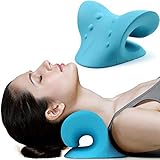
RESTCLOUD Neck and Shoulder Relaxer
- Gravity-based foam stretch
- Weighs 5.29 oz
- Works on any flat surface

WANYIDA Foam Traction Block
- Three-tier height placement
- High-density EVA foam
- FSA and HSA eligible

All 10 Best Cervical Traction Devices Compared in 2026
| Product | Specifications | Action |
|---|---|---|
| RESTCLOUD Neck and Shoulder Relaxer |
|
Check Latest Price |
| WANYIDA Foam Traction Block |
|
Check Latest Price |
| ELESIK Inflatable Neck Decompressor |
|
Check Latest Price |
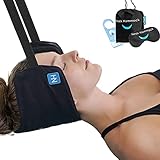 The Original Neck Hammock The Original Neck Hammock |
|
Check Latest Price |
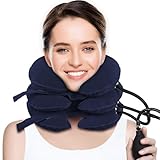 CRABCLAW Inflatable Collar CRABCLAW Inflatable Collar |
|
Check Latest Price |
 Jaximy Inflatable Neck Stretcher Jaximy Inflatable Neck Stretcher |
|
Check Latest Price |
 Air Collar Electric Pump 2nd Gen Air Collar Electric Pump 2nd Gen |
|
Check Latest Price |
 Dr-Ho’s Neck Comforter Dr-Ho’s Neck Comforter |
|
Check Latest Price |
 AUVON Inflatable Stretcher Size L AUVON Inflatable Stretcher Size L |
|
Check Latest Price |
 S Plush Inflatable Traction Collar S Plush Inflatable Traction Collar |
|
Check Latest Price |
Which Type of Cervical Traction Device Do You Need?
There are four mechanical approaches, and picking the wrong one is the single most common reason people buy twice. Here is the taxonomy.
Foam floor stretchers (RESTCLOUD, WANYIDA) use nothing but your body weight against an angled or curved foam base. The force is small, steady and completely passive, and the session happens lying on the floor. Best for stiffness after screen time, general tightness and people who want zero setup.
Hanging hammocks (The Neck Hammock) suspend the head from a strap so gravity does the pulling. The stretch is deeper than foam but there is no force limiter, so you control depth with your own body position. Best for users who want a stronger, more vertical pull and can rig a proper attachment point.
Inflatable collars (CRABCLAW, Jaximy, ELESIK, AUVON, Dr-Ho’s, S) are pumped up by hand under the chin. You set the level, they hold it, and they are the easiest to use in a chair or at a desk. Best for portable, repeatable sessions on the go.
Powered air collars (the electric-pump Air Collar) inflate vertical air columns under the shoulders and are the only device in this roundup that publishes a force ceiling of 20 lbs and a neck-circumference range. Best for users who want measured, repeatable traction and can match the fit window.
1. RESTCLOUD Neck and Shoulder Relaxer – Best Overall Foam Stretcher
RESTCLOUD Neck and Shoulder Relaxer, Cervical Traction Device for TMJ Pain Relief and Cervical Spine Alignment, Chiropractic Pillow Neck Stretcher (Blue)
Polyurethane foam
8.66 x 6.69 in
5.29 oz
Helps relieve neck pain in as little as 10 minutes a day
Pros
- Ergonomic curve matches the cervical spine
- Very light at 5.29 oz
- Works on floors mats or flat outdoor ground
- Helps relieve neck pain in as little as 10 minutes a day
Cons
- Needs a 1 to 3 day adjustment period
- Not suitable as an all-night pillow
- Traction depth is limited versus pumped devices
The RESTCLOUD is a wedge of polyurethane foam shaped so that the dip in the middle follows the natural curve of your neck. You lie down, slide your head into the curve, and gravity does the rest. No pumping, no gauges, no assembly, and the whole thing weighs 5.29 ounces.
What makes it our top pick is the review volume rather than the spec sheet. At more than 93000 ratings it is the most reviewed traction device in the category, so the long-term user consensus is unusually easy to read. Buyers consistently describe it as sturdy enough to use on a hard floor, a yoga mat or flat outdoor ground, and they use it for neck pain, upper-back tension and hand numbness.
The honest limitation is that the stretch is passive and shallow. This is decompression by gravity, not by measured force, and if your problem is a compressed nerve root rather than tight muscles, you may need something with a pump. It also asks for patience: reviewers report a 1 to 3 day adjustment period where the first sessions can feel uncomfortable or mildly dizzy.
A few users also mention a strong chemical smell straight out of the packaging that fades after a few days. It is not a defect, but if you are sensitive to foam odour, open it and leave it somewhere ventilated before your first session.
How to get the most out of the RESTCLOUD
Start at five minutes, not twenty. Nearly every experienced user in the reviews says the first few sessions feel strange and that relief only becomes obvious once you have ramped up gradually over about a week.
Warm the area first with a hot shower or a heating pad, then lie down with your arms out to the sides so the shoulders can drop away from the neck. Bending your knees takes pressure off the lower back, which stops you from arching to compensate.
Who should pick a different device instead
If you have jaw or TMJ problems, this is one of the safer options because the load goes into the back of the skull rather than under the chin, and reviewers rarely complain about jaw pressure here. If you travel often or only have ten minutes at a desk, the Jaximy collar is faster to use.
It is also not a sleep product. The curve is designed for a timed stretch, and users report it is not comfortable enough to use as an overnight pillow, so treat it as a daily tool rather than a bed accessory.
2. WANYIDA Foam Traction Block – Best Value Pick
WANYIDA Neck and Shoulder Relaxer, Neck Stretcher Chiropractic Pillows for Pain Relief, Cervical Traction Device for Cervical Spine Alignment,FSA HSA Eligible
Ethylene vinyl acetate
8 x 4.5 x 4.9 in
5.29 oz
FSA and HSA eligible
Pros
- Highest rated among foam stretchers
- Three-tier placement suits different body sizes
- Very light at 5 oz
- FSA and HSA eligible
Cons
- No inflatable or mechanical force adjustment
- Sessions must ramp up from about 2 minutes
- Not intended as an overnight pillow
The WANYIDA is a high-density EVA foam block with a cervical orthotic shape built from a model of the spine. Where the RESTCLOUD relies on one fixed curve, this one lets you place the block at three different height tiers and slide your neck down to a deeper or shallower position.
That three-tier system is the feature reviewers mention most. Taller or stiffer users can back off to the shallowest setting, and smaller users can drop to the deepest tier, which means one purchase fits a wider range of bodies than most foam stretchers. At 4.4 stars it is the highest-rated of the two foam blocks here, with a 69 percent five-star share.
It weighs 5 ounces, needs no power, and works on any flat surface at home or in an office. It is also listed as FSA and HSA eligible, which is worth knowing since these items are usually paid out of pocket.
Because there is no pump and no gauge, your only adjustment is body position. Buyers are clear that sessions need to be built up from around two minutes rather than started long, and the relief is real but gradual rather than immediate.
When three-tier placement actually matters
The height setting changes how much of your body weight reaches the cervical curve, not just how it feels. A deeper tier produces a stronger opening between the vertebrae, which is what you want for stiffness, and a shallower tier reduces the load if you are sensitive or starting out.
Most users settle on the middle tier and stay there. If you are over six feet, or if you have a broader neck, start at the shallowest tier for the first week before you judge the product on comfort.
Where it falls short
If your symptoms come from a diagnosed disc issue, this gives you no way to control or measure the force, and the block does nothing while you are sitting upright. It is a lying-down floor tool and only.
It is also not a pillow, despite appearances. Users are consistent that it is not comfortable enough for overnight sleep, and attempting it tends to end with neck stiffness the next morning rather than relief.
3. ELESIK Inflatable Neck Decompressor – Lowest Profile Option
Cervical Neck Traction Device, Neck Stretcher and Cervical Traction Device
6 x 6 x 0.5 in packed
3.53 oz
Contoured chin support
Triple-seal design
Pros
- Highest rating in the roundup at 4.5 stars
- Contoured chin support avoids skin irritation
- Deflates to fit a bag for office and travel
- Leak-free triple-seal
Cons
- Inflation pressure takes trial and error
- Lower review count than most rivals
- Relief is gradual and does not replace clinical care
The ELESIK is the newest design in this group, first listed in March of 2026, and it is the smallest thing here: 3.53 ounces and 0.5 inches thick once deflated. That is the entire pitch. It disappears into a laptop bag, which no floor block or hanging hammock can do.
Mechanically it is an inflatable collar with a contoured height and built-in chin support. Reviewers like that the chin is supported rather than digging into skin, and they report reduced shoulder tension and better range of motion after a few days of consistent use. The triple-seal system is what keeps the pressure steady without topping up mid-session.
At 4.5 stars with 80 percent five-star reviews, it scores the highest of anything we tested in this roundup. The caveat is sample size: 702 reviews is the thinnest database here, so the confidence behind that number is lower than the RESTCLOUD’s 93000.
The single learning curve is finding the right inflation level. That takes a few attempts, and getting it wrong is the most common reason people abandon an inflatable collar in the first place. Pump in small increments and stop the moment you feel a steady, gentle opening.
Best situations for a collar this small
Travel is the obvious one. It fits in carry-on luggage, needs no outlet and no assembly, and works in a hotel room or a quiet seat. Many users also use it at their desk during a lunch break, which is where the compact size pays off.
It is also a good first traction device if you are nervous about a big mechanical rig. The force is self-limited by your own pumping, and if it feels wrong you can let a little air out immediately.
Who it will not suit
Do not buy it expecting a deep structural correction. Relief here is gradual, and reviewers are clear that it does not substitute for treatment of a diagnosed condition. If you have active jaw problems, note that it uses chin support by design, so the load path is the one most likely to aggravate TMJ.
It is also the newest listing, and the review base is still growing. Buyers who want a long track record of durability reports are better served by a design that has been on the market for years.
4. The Original Neck Hammock – Best for Travel and Deeper Stretch
The Original Neck Hammock Neck Stretcher – Cervical Traction Device for Neck Decompression – Portable Device for Neck Tension Relief
100% polyester
100cm adjustable straps
9.12 oz
Developed by a doctor and physical therapist
Pros
- Hanging traction mimics an in-office machine
- Portable and light for travel or office use
- Developed by a doctor and physical therapist
- Users report pressure release with herniated discs
Cons
- No stand or cradle is included
- No pressure control or safety limiter
- Straps and clips reported to fail within weeks
- Pad pressure on temples and nape
The Neck Hammock hangs your head from a single strap, so gravity pulls straight down the axis of the spine instead of pressing into a curve. It is the only genuinely different mechanism among the lightweight options here, and it is the closest thing to an in-office traction unit you can put in a bag.
It was developed by a doctor and a physical therapist, and buyers with herniated discs report noticeable pressure release and less neck crunching once they have used it consistently. At 9.12 ounces with 100cm adjustable straps, it packs flat and sets up with no tools.
The critical detail is that no stand or cradle is included. You need a solid overhead attachment point, such as a headboard beam or a heavy desk leg, and a doorway hinge is not a good substitute. Buyers who rig it properly report strong, gradual relief; those who improvise tend to file one-star reviews.
Durability is the other concern. Straps and plastic clips are reported to fail anywhere from a few weeks to about a month of regular use, and there is no pressure control or safety limiter, so over-extension is entirely up to you.
Rigging it correctly is the whole game
Attach it to something that cannot move and check it before you put weight through it. Users who fixed it to a headboard or a proper frame describe a steady, gentle downward pull that builds relief over several sessions, which is the behaviour you want.
Keep the sessions short at first, around five to ten minutes, because the depth of this stretch is genuinely greater than a foam block. Backing off is easy; you simply stand up.
Where the hammock disappoints
If you are the type who will not spend two minutes rigging an attachment point each time, this is a fast path to abandonment. Setup friction is the top reason people stop using traction in this category, and the hammock has the most setup of any device in the roundup.
It is also a poor choice if you have jaw issues, since several users report uncomfortable pressure from the temple and nape pads, and it has no way to limit how far you extend.
5. CRABCLAW Inflatable Collar – Best Leak Protection
CRABCLAW Cervical Neck Traction Device for Effective Neck Pain Relief
Breathable vegetable fleece
Two Velcro straps
10.55 oz
Triple leak-protection design
Pros
- Adjustable Velcro straps tune the fit
- Vegetable fleece is soft against the skin
- Triple leak protection with ball valve and bleed valve
- Light and foldable for work breaks
Cons
- Inflatable support feels less sculpted than foam stretchers
- Highest one-star share among the inflated collars
- Strap tension can be uncomfortable on some necks
The CRABCLAW is an inflatable collar wrapped in breathable vegetable fleece, with two Velcro straps so you can tune the fit and the tightness. It sits at 10.55 ounces and folds flat, which makes it a straightforward office or lunch-break tool.
Its distinguishing engineering is the leak protection: a ball inside the inflation tube, a separate bleed valve, and a split three-pipe system. In practice that is why buyers rarely report the slow air loss that plagues cheaper collars, and the fleece contact is repeatedly described as comfortable against the neck.
It sits mid-pack on the numbers, with 3292 reviews and a 4.0 average. The honest wrinkle in the data is that 10 percent of its reviews are one star, the highest share among the inflated collars we looked at, and the complaints cluster around inflation pressure and strap tension rather than durability.
Fit is adjustable enough to suit most neck sizes, but the collar feels less sculpted than a foam stretcher. If you want the shape of the curve to do the work, this is the wrong category; if you want control over pressure, it is the right one.
Why the three-pipe valve matters
The split three-pipe design lets you lock air in one section and add to another, which is how you tune a partial rather than all-or-nothing stretch. It also means the collar holds pressure through movement instead of drifting back to flat within minutes.
That reliability is the reason it earns its place. Most inflatable complaints are really complaints about re-pumping, and a collar that holds its pressure for a full 15 to 20 minutes changes how often you can use it.
Fit issues to check before ordering
The straps wrap close to the neck, and a minority of users find that tension uncomfortable. Try wearing it for five minutes at home before you commit to a full session, and loosen the Velcro if you feel pressure at the front of the neck.
If you have jaw problems, note the load goes under the chin. Anyone with active TMJ symptoms should test a foam option first, since those support the back of the skull instead.
6. Jaximy Inflatable Neck Stretcher – Best for Chair Use
Jaximy Neck Stretcher for Neck Pain Relief, Cervical Traction Device, Neck Traction Device, Adjustable Inflatable Neck Brace & Cervical Neck Traction Device Home Use Decompression(Purple)
Latex construction
3.8 x 6 x 3.8 in
10.23 oz
Inflates in about 10 seconds
Pros
- Usable seated in a chair
- Inflates in about 10 seconds and folds into a bag
- Soft latex with a triple anti-leakage valve
- Users report reduced arm and hand numbness
Cons
- Confusing instructions around the valve
- Some users report slow air loss
- Velcro may not reach very small necks
- Strap can feel uncomfortable
The Jaximy is the option to look at if getting down on the floor is the reason you never start. It works seated in a chair, it is fully inflated in about ten seconds, and it folds into a bag for travel. No assembly at any stage.
It is a soft latex collar with a triple anti-leakage system built around a ball valve, a latex ball, a bleed valve and a split three-pipe. Buyers who have worked out the valve report a genuinely airtight seal, and several users with pinched nerves or whiplash report meaningfully reduced arm and hand numbness.
The most common complaint by a wide margin is not comfort or durability, it is the instructions. The ball-in-tube airflow control step is poorly explained, and users who do not understand it report having to re-pump every few minutes. Spend five minutes getting it right and that problem disappears.
A secondary issue is sizing at the small end. The Velcro may barely reach around very small necks, so measure yours before buying, and note the strap can feel uncomfortable against the skin while it does its job.
Master the valve before your first session
Test the collar empty first, seated, with no neck in it. Pump until firm, close the release valve, then wait ten minutes and press it. If it is still firm, the seal is working and you can stop worrying about it for the rest of the article.
Once the valve is understood, this becomes the most convenient device in the roundup for anyone who wants two or three short sessions a day rather than one long floor routine.
Where it is the wrong tool
The stretch is moderate, so if you have a structural diagnosis you will want a deeper or more measurable pull. And because the load sits under the chin, TMJ and jaw problems are a real reason to look at a foam stretcher instead.
Very small neck circumferences are also the weak spot, because the Velcro closure runs out of reach before it is tight enough to hold the collar in place.
7. Air Collar with Electric Pump – Best for Measured Force
Neck Traction Device by Air Collar – Neck Stretcher – Cervical Traction Device – Neck & Shoulder Pain Relief – Stretcher Collar for Improved Spine Alignment (2nd Gen Electric Pump) – See Size Chart*
Electric pump
NTD3000
Fits 13.7 to 16.8 inch necks
Up to 20 lbs of traction
Pros
- Only device here with a stated 20 lb force ceiling
- Side knobs adjust traction strength independently
- Memory foam with a removable washable chin pad
- Usable seated and upright
Cons
- Most expensive device in the roundup
- Fit restricted to 13.7 to 16.8 inch necks
- Pressure can focus on the jaw
- Bulky next to inflatable and foam collars
This is the outlier in the roundup, and the reason it is worth a look. It is the only device here that states a force figure, up to 20 lbs delivered through vertical air columns, and it is the only one that publishes a fit window: neck circumferences from 13.7 to 16.8 inches.
That specificity changes the buying question. Instead of guessing whether a collar pulls hard enough, you know the ceiling, and the side knobs let you adjust the traction strength independently on each side. It sits on the chest and shoulders so you stay seated and upright rather than lying on the floor, and the memory foam carries a removable, washable chin pad.
It is also the most expensive device in the group by a wide margin and the lowest rated at 4.0 stars, and the reviews explain why. Fit is restricted to that circumference window, so it is a real gamble if you measure outside it, and jaw pressure is a recurring theme because the chin pad takes the load.
It is bulky next to a foam block or a deflated collar, and it needs a mains-style electric pump rather than a hand pump, so it is a bedroom or dedicated spot device, not a travel one.
Measure before you order, because the fit window is narrow
Take a tape measure around your neck and check it against 13.7 to 16.8 inches. This is the one product in the roundup where a five-second measurement saves you from a return, and the reviews show buyers outside the window consistently rate it low.
If you fall inside the range, start at the lowest knob setting and work upward. The vertical air columns lift the cervical spine, so the sensation should feel like a gentle lift under the shoulders rather than a sharp pull on the head.
Who this suits and who it does not
It suits someone who wants measured, repeatable traction and can match the fit window, and who will use it in one fixed location. It does not suit frequent travellers, anyone outside that circumference range, or anyone with jaw problems.
If the number itself is the appeal, be clear about the cost per session. A premium unit that sits in a cupboard gets no cheaper, and the foam options on this list deliver most of the same daily comfort at a fraction of the outlay.
8. Dr-Ho’s Neck Comforter – Best Long-Running Design
Dr-Ho’s Neck Comforter – Dr-Ho’s Neck Comforter – Cervical Traction Device for Pain & Posture Support – Inflatable Traction Equipment, Adjustable Stretcher for Home Use
Soft velvet and breathable fabric
6.89 x 3.15 x 10.43 in
10.4 oz
Three separately inflatable rings
Pros
- Longest-running design here
- in use since 2010
- Three rings let you tune the stretch precisely
- Soft velvet cover does not trap heat
- Deflates flat and folds into a bag
Cons
- Pushes up on the jawline
- Velcro straps stretch with repeated pumping
- Some units develop seam leaks
- Closing the release valve before pumping is not obvious
The Neck Comforter has been on the market since 2010, which makes it the oldest design here and the one with the deepest long-term user base. It is a soft velvet-covered inflatable collar with three separately inflatable rings and a built-in hand pump, and you set each ring to your own comfort level.
That three-ring design is the real feature. Instead of one uniform stretch you can inflate the front more than the back, or vice versa, which lets you shape the pull to your particular stiffness. Regular buyers report relief from pinched nerves and improved head alignment, and the velvet cover is noted for not sticking to sweaty skin.
It needs no batteries and no tools, and it deflates flat enough to fold into a purse or a briefcase. It works sitting, standing or lying down, at home, in an office or while travelling, which is unusual flexibility for a collar.
The drawbacks are well documented. It pushes up on the jawline, which makes it a poor choice if you have TMJ problems, and the Velcro straps stretch and give way with repeated pumping. Seam leaks appear in a meaningful share of the one and two star reviews.
Getting the release valve right
You must close the release valve before you pump, which is not obvious from the instructions and is the most common setup error. If you inflate with the valve open, the collar never holds pressure and you will assume the product is faulty.
Once that is understood, pump each ring separately in small increments. The adjustable rings let you reduce the front ring if the jaw pressure bothers you, which partly answers the most common complaint about this design.
Long-running versus well-reviewed
Sixteen years on the market is a genuine reliability signal, and there are two package options, a standard version and a deluxe package. But 594 reviews is a thinner base than most rivals here, and the hardware complaints on straps and seams are real.
If your jaw is the weak point, skip this one. If you want a doctor-adjacent design with per-ring control and a track record that spans over a decade, it earns its place.
9. AUVON Inflatable Stretcher with Chin-Up – Best for Sizing Options
AUVON Inflatable Neck Stretcher with Chin-Up for Effective Neck Pain Relief
Size L fits 14 to 16.5 inch necks
Chin-up wedge at 15 degrees
13.05 oz
Triple-layer widened base
Pros
- Chin-up wedge supports the chin at 15 degrees
- Three sizes let you match your neck
- Triple-layer base gives even support without facial pressure
- Users with post-fusion necks report spasm relief
Cons
- Chin-up wedge can press on the jaw
- Velcro straps have a small adjustment surface and sharp corners
- Sizing is specific and the wrong size will not fit
The AUVON distinguishes itself with a chin-up wedge that holds the chin at a 15 degree angle, which is meant to open the cervical curve more than a flat inflatable collar. It uses high-density supportive foam fill inside a thickened PVC air tube, wrapped in short plush fabric.
The bigger story for buyers is sizing. This device comes in three sizes, and the listing here is size L for necks between 14 and 16.5 inches. In a category where most collars are one size fits all, being able to match the collar to your measurement is a meaningful advantage, and the triple-layer widened base spreads support without pushing on the face.
Users with post-fusion neck problems report that it stops severe muscle spasms quickly, and at 4.2 stars the 482 reviews are positive. It is a newer design, first listed in October of last year, so the long-term durability picture is not fully formed yet.
That chin-up wedge is also the top complaint. Users with jaw sensitivity report the wedge pressing uncomfortably on the jaw, which is the same trade-off in reverse: the angle that helps the curve is the angle that loads the jaw. The Velcro straps also have a small adjustment surface with sharp corners that can dig in.
Getting the size right matters more here than anywhere
Measure your neck first. This is the one product in the roundup where the wrong size is not a mild annoyance, because the chin-up wedge will not sit at the correct 15 degree angle if the collar is the wrong size, and you will lose most of the benefit.
Once fitted, keep sessions in the 10 to 15 minute range and build from there. The foam fill gives a more sculpted feel than a plain air column, which some users find more comfortable for longer stretches.
Who should skip it
If you have diagnosed TMJ or jaw problems, this is the one to rule out. The chin-up design loads exactly the joint you are trying to protect, and the reviews confirm jaw pressure is the recurring theme.
Buyers who do not want to measure, or who prefer a design with a long public track record, are better served by an older model with a much larger review count.
10. S Plush Inflatable Traction Collar – Best for Soft Fabric
S Cervical Neck Traction Device for Neck Pain Relief – Inflatable Neck Stretcher Traction Collar for Neck Decompression – Best Home Use Neck Brace Pump (Blue Plush)
Dutch plush over polyester
6.3 x 6.14 x 3.03 in
14.11 oz
Recommended 15 to 30 minute sessions
Pros
- Soft Dutch plush preferred by long-time users
- Front-to-back height difference follows the spine curve
- Holds air without a screw-nut locking motion
- Portable and needs no assembly
Cons
- Seam separation and punctures reported
- Creaks audibly with head movement
- Velcro edges can dig into the neck
- Comfort is subjective and some buyers returned it
The S collar wraps Dutch plush fabric over polyester, and that material is the reason it has a repeat-purchase reputation among people who have owned many traction collars over the years. Plush against the skin matters more than it sounds when you are wearing something under your chin for 20 minutes.
The shape is thoughtful too. The front-to-back height difference follows the physiological curve of the spine, and it holds air on its own once you stop pumping, with no screw-nut locking motion to fiddle with. The hand pump uses standard connectors, so you can upgrade the pump later if you want.
At 4.0 stars across 477 reviews it sits mid-pack, and the durability notes are the reason. Several reviews describe seams separating or pinholes developing within months, which leads to a total loss of air. It is the heaviest item here at 14.11 ounces, which is not what you expect from a collar.
It is also not silent. Users report audible squeaking and creaking with head movement, which is harmless but noticeable in a quiet office, and the Velcro edges can dig into the neck and take some fiddling to position.
Session length is the easiest thing to get right
The stated guidance is 15 to 30 minutes a day, and users who follow it report solid pain relief. This is the most clearly specified protocol in the roundup, which makes it a good default if you have no clinician guidance to follow.
Do the first two sessions at the lower end. The stretch is firm for a collar, and easing in avoids the neck stiffness that comes from pushing through an unfamiliar position.
Where the fabric advantage stops
Comfort is genuinely subjective here, and some buyers returned it even while praising the material. If you dislike the sensation of plush against the jaw, a foam stretcher gives you a completely different experience with no fabric involved at all.
Between the creaking and the seam reports, this is a reasonable choice for a desk break if you already know you like collar devices, but we would not make it the first traction device you buy.
Who Should Not Use a Cervical Traction Device
Traction is a low-risk tool for a low-risk problem, and it becomes a poor idea the moment there is structural damage, bone weakness or nerve compression at the level where you would be pulling. Please read this section before any of the products above.
Ask a clinician before using any device here if you have arm or hand numbness or weakness, a recent fall, car accident or whiplash, diagnosed osteoporosis, cervical myelopathy, diagnosed cervical instability, vertebral-basilar artery insufficiency, a spinal tumor or vascular aneurysm, or if you are pregnant. Torticollis and active jaw problems are also worth a professional opinion first.
Two further rules. Do not use traction on a neck that a clinician has told you to immobilise, and stop immediately if you feel numbness, tingling, dizziness, visual changes or pain radiating below the shoulder.
None of this is medical advice, and none of these products should replace a diagnosis. If your neck pain has lasted more than a few weeks or is waking you at night, that is a conversation for a clinician, not a shopping decision.
How to Use a Cervical Traction Device Safely
Every experienced user in these reviews describes the same pattern: heat first, low force, short sessions, gradual increases. People who follow it get relief; people who crank the force on day one tend to feel worse and quit.
Apply heat first. A hot shower or a heating pad for 10 to 15 minutes relaxes the suboccipital and upper trap muscles so they do not fight the stretch. Cold muscles plus traction equals muscle guarding and soreness.
Set up in a neutral posture. Sit or lie with your shoulders down and back, chin level rather than tilted, and your gaze forward. A tucked chin changes the angle of the pull entirely.
Start at your lowest setting. For a collar that means barely any inflation. For a foam block that means the shallowest tier. For a hammock that means the shortest hang.
Build to a gentle stretch. You should feel a mild opening and some tension, never sharp pulling on the jaw or the base of the skull.
Hold for 10 to 20 minutes. Most protocols in this category land between 10 and 30 minutes. Start at the lower end of that range.
Come out slowly. Sit up and hold still for a minute before standing, since your neck will be temporarily less stable than usual.
Once daily, then reassess. Give it two weeks of consistent use before deciding whether it is working. If you see no change by then, the device is not the limiting factor.
Pairing traction with a cooling routine afterward is something most people find useful, and our cryotherapy device roundup covers the options if you want something beyond a bag of ice.
How to Choose a Cervical Traction Device: 8 Criteria
1. Force control. A gauge, a knob or a pump you can feel matters more than marketing adjectives. The electric-pump Air Collar is the only device here with a published 20 lb ceiling, which tells you exactly what you are getting.
2. Chin support versus occipital support. This is the most important comfort decision and almost nobody explains it. Chin-supported collars and chin-up wedges pull from under the jaw, which is what aggravates TMJ. Foam floor stretchers and hammocks support the back of the skull, which is far gentler on the jaw. If you have any jaw symptoms, choose skull support.
3. Neck circumference fit. A published range beats a one-size claim. The Air Collar fits 13.7 to 16.8 inches, the AUVON size L fits 14 to 16.5 inches, and everything else relies on strap adjustment.
4. Portability. If you travel or want to use it at a desk, weight and packed size decide it. The ELESIK is 3.53 ounces and half an inch thick deflated; the Air Collar is bulky by comparison.
5. Setup friction. This decides whether you will still be using the device in month three. Zero-setup foam and collars survive; anything needing a doorway, a stand or a valve tutorial usually does not.
6. Durability and washability. Inflatable collars depend on seams and valves, and seam failures are the most common complaint in this category. Removable washable pads, like the one on the Air Collar, matter for long-term use.
7. Heat pairing. None of these devices heat your neck. A heating pad used before the session is part of the routine, not an accessory, and users consistently report better results with it. If cold therapy appeals to you more broadly, our microcurrent device guide covers adjacent at-home recovery tools.
8. Adherence over features. A device you will use for five minutes daily beats a better device you abandon. Judge the one you will actually open the door for, and weight review count heavily since a large base tells you what long-term owners think after the novelty is gone.
Frequently Asked Questions
What is the best cervical neck traction device for home use?
The RESTCLOUD Neck and Shoulder Relaxer is our top pick for home use because it is the most reviewed device in the category, weighs only 5.29 ounces, needs no assembly and works on any flat surface. Choose the WANYIDA foam block if you want three-tier height control, or an inflatable collar such as the ELESIK if you plan to use it seated or while travelling.
Do cervical neck traction devices really work?
Short-term relief from posture-related stiffness and compression is well documented, and thousands of user reviews across these products describe reduced neck pain, less shoulder tension and sometimes reduced hand numbness. Long-term structural change is not established, and traction is not proven to realign vertebrae or restore cervical lordosis. Treat it as symptom management that works best alongside posture correction and strengthening, not as a cure.
How long should I wear a cervical neck traction device?
Most protocols in this category run between 10 and 20 minutes per session, with some devices suggesting up to 30 minutes. Beginners should start at five minutes and build up over a week. Heat the area for 10 to 15 minutes before you start, and never force the stretch to the point of sharp pulling.
Can I overdo cervical traction?
Yes, and over-extension is the most common way people hurt themselves. Coming out of a session too quickly, using more force than you need, or going over 30 minutes can leave you sore and stiff. Increase force and duration gradually, and stop immediately if you feel numbness, tingling, dizziness, visual changes or pain radiating below the shoulder.
How often should I use a neck traction device?
Once daily is the most common pattern in the user reviews, and some people with posture-driven stiffness split it into two short sessions. Consistency over weeks matters more than daily use, so give any device two weeks of consistent sessions before deciding whether it helps. If nothing has changed by then, the device is unlikely to be the limiting factor.
Will insurance cover a home cervical traction device?
Coverage varies widely and most of these devices are sold directly to consumers rather than through a durable medical equipment supplier, which means they are usually paid out of pocket. Some are FSA and HSA eligible, which is worth checking, and a device recommended by your clinician or physical therapist may be reimbursable under a flexible spending account. Ask your insurer directly for a written answer before you buy.
Is traction good for cervical spondylosis or spinal stenosis?
Ask a clinician before using traction for either, because both involve narrowing and bony or disc changes that are not the same problem as posture-related stiffness. Spondylosis and stenosis can also coexist with myelopathy, where traction is not appropriate. If you have a diagnosis, bring it to a clinician before pulling on your own neck, and treat this roundup as a general guide rather than advice.
Does a traction device help tension headaches?
For headaches driven by forward head posture, a gentle session can help, because traction reduces the load on the suboccipital muscles at the base of the skull that contribute to those headaches. Users of the inflatable collars in this roundup report reduced tension after a few days. If your headaches come with arm numbness, visual symptoms or a sudden onset, see a clinician rather than treating them with a device.
The Best Cervical Traction Device for 2026
The best cervical traction device in 2026 depends on one question: do you want a passive floor stretch, a portable collar, or a deeper hanging pull? Pick the RESTCLOUD if you want the most-reviewed, zero-setup option and the strongest long-term user record of anything in this roundup. It weighs 5.29 ounces and asks nothing of you but five quiet minutes a day.
Pick the WANYIDA if you want more control over the angle, since its three-tier placement adapts to different body sizes. Pick an inflatable collar, such as the ELESIK or Jaximy, if you need to use it seated, at a desk or in a hotel room. Pick the Air Collar with the electric pump only if you specifically want a published force figure and can match its neck-circumference window.
Whichever you choose, heat first, start low, keep sessions in the 10 to 20 minute range, and give it two weeks before you judge it. And if you have arm numbness, a recent injury or a structural diagnosis, that decision belongs with a clinician rather than with this list.