

The best tortoise enclosure is the one that gives your animal floor space to walk, substrate deep enough to burrow into, a real temperature gradient, and somewhere to disappear when it wants to. Most housing sold for tortoises falls short on at least one of those four things, usually the first one.
We went through the current listings for tortoise housing, checked the dimensions, materials, ventilation, tray systems and lamp integration on each one, and read what owners report back after living with them. Ten products earned a place below, covering indoor tables, outdoor houses, multi-room layouts and budget starters. One of them is built from a wood that tortoise owners warn against, and we explain what that means for you before you order it.
This guide is for 2026, and every number here comes from the listing or from owner feedback, not from a spec sheet we guessed at. If you are still working out your species and your room, the core requirements section comes first, because those five points decide which of the ten actually fits.
Table of Contents
- Top 3 Picks for the Best Tortoise Enclosures (October 2026)
- 10 Best Tortoise Enclosures in 2026
- What Makes a Good Tortoise Enclosure: Core Requirements
- Indoor vs Outdoor Tortoise Enclosures: How to Decide
- Tortoise Enclosure Size by Species: How Much Floor Space
- How Much Substrate to Buy and How Deep to Make It
- Heating and UVB Lighting for Tortoise Enclosures
- Total System Cost: What a Working Setup Actually Requires
- How to Predator-Proof an Outdoor Tortoise Enclosure
- What to Put Inside a Tortoise Enclosure
- How We Chose: The Checklist Behind Every Pick
- 1. GEGURI Wooden Tortoise Habitat – Best Overall Two-Room Enclosure
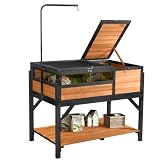
- 2. Aivituvin Tortoise Habitat – Best With an Adjustable Lamp Holder
- 3. PawHut Wooden Tortoise Habitat – Best Value Two-Room Cage
- 4. PetsCosset Tortoise Habitat – Best Budget Starter With a Pull-Out Tray
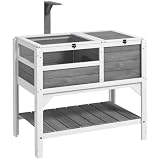
- 5. PawHut Tortoise Habitat With Shelf Storage – Best Where Floor Space Is Tight
- PawHut Tortoise Habitat with Shelf Storage, Tortoise Enclosure with Weather Protection, Reptile Gift Accessory, Reptile Enclosure with Tray, Light Support Frame, Light Gray
- A good fit for a small room with more vertical space than floor space
- Not the right choice for a low ceiling or a heavy heat source
- 6. Magazoopet Large Tortoise Enclosure – Best Lamp Stand Adjustment
- 7. ZENTAVO 3-Room Tortoise Habitat – Best Multi-Level Layout
- 3-Room Large Tortoise Habitat with Pull-Out Tray, Wooden Tortoise Enclosure Indoor & Outdoor with Ramp, Grass Mat, Openable Roof, Luxurious Reptile Enclosure for Small Animals, Yellow
- A good fit for larger indoor rooms and arboreal-style enrichment
- Not the right choice for small rooms or frequent moving
- 8. VEVOR Cedar Tortoise Habitat – Best Looking, With One Material Warning
- 9. BIRASIL 2-Tier Wood Tortoise Enclosure – Best With a Built-In Water Area
- 10. LIYAHUIA Wooden Tortoise House – Best Wide, Low Profile
- Frequently Asked Questions
- Final Verdict: Which Tortoise Enclosure Should You Buy
Top 3 Picks for the Best Tortoise Enclosures (October 2026)

GEGURI Wooden Tortoise Habitat
- Two-room layout
- Fir wood
- Removable pull-out tray
- Indoor and outdoor

10 Best Tortoise Enclosures in 2026
All ten are wooden habitats with detachable or included legs, and all ten work as indoor housing. Six carry an explicit indoor and outdoor claim on their listing, and one more has a documented wood problem worth reading about before you commit. Ratings and review counts below are the live figures from each listing, so you can see how much owner history sits behind each one.
| Product | Specifications | Action |
|---|---|---|
| GEGURI Wooden Tortoise Habitat |
|
Check Latest Price |
 Aivituvin Tortoise Habitat Aivituvin Tortoise Habitat |
|
Check Latest Price |
| PawHut Wooden Tortoise Habitat |
|
Check Latest Price |
 PetsCosset Tortoise Habitat PetsCosset Tortoise Habitat |
|
Check Latest Price |
 PawHut Habitat With Shelf Storage PawHut Habitat With Shelf Storage |
|
Check Latest Price |
 Magazoopet Large Tortoise Enclosure Magazoopet Large Tortoise Enclosure |
|
Check Latest Price |
 ZENTAVO 3-Room Tortoise Habitat ZENTAVO 3-Room Tortoise Habitat |
|
Check Latest Price |
 VEVOR Cedar Tortoise Habitat VEVOR Cedar Tortoise Habitat |
|
Check Latest Price |
 BIRASIL 2-Tier Wood Enclosure BIRASIL 2-Tier Wood Enclosure |
|
Check Latest Price |
 LIYAHUIA Wooden Tortoise House LIYAHUIA Wooden Tortoise House |
|
Check Latest Price |
What Makes a Good Tortoise Enclosure: Core Requirements
Before any brand, five requirements decide whether an enclosure works. Every one of the ten products below meets some of them, and none of them meets all five perfectly, so read this list first and use it as your filter.
Size. Give an enclosure at least ten times the square of your tortoise’s shell length in floor area. A 4 inch shell needs 1600 square inches, which is roughly 4 feet by 3 feet of usable floor.
Style. An open-topped wooden tortoise table beats a glass aquarium for most species. Glass walls trap heat, block useful UVB and stress an animal that spends its life looking for cover.
Substrate. Lay down at least 4 inches of organic topsoil or coco coir so the tortoise can dig and regulate its own temperature. Avoid cedar, pine, perlite and anything fertilized.
Lighting and heat. Provide a UVB lamp and a separate heat source, then arrange them so one end of the enclosure is warm and the other end is cool. One temperature across the whole box is not a gradient.
Security. Provide a hide the animal can disappear into, a screened or mesh top, and latches a raccoon cannot work open. An animal that cannot hide is an animal under constant stress.
That last point is the one buyers skip most often. Research on prey animals links chronic stress to poor immune function, and a tortoise that never gets to retreat will use the corner of its enclosure as a permanent hide whether you built one or not.
None of the ten enclosures below ships with a UVB lamp, a thermostat or a hygrometer, even the ones with a built-in lamp stand. Treat the enclosure as one piece of a system, and budget for the rest before you order.
Indoor vs Outdoor Tortoise Enclosures: How to Decide
The indoor versus outdoor question comes down to species, climate and how much supervised time you can actually provide. Tortoises that live outdoors in a predator-proof habitat in a mild climate get natural sunlight, real seasonal shifts and more walking space than any indoor table can offer.
Indoors wins for hatchlings, juveniles, quarantine cases and any climate with hard winters. Long-time keepers on tortoise forums consistently describe an indoor setup as a grow-out arrangement rather than a permanent home, which is why most owners here end up planning for a bigger space later.
Here is how our ten picks divide. GEGURI, Aivituvin, the PawHut two-room, PetsCosset and LIYAHUIA are all sold for both indoor and outdoor placement. PawHut shelf storage and ZENTAVO add water-resistant finishes for the same reason, while the Magazoopet, VEVOR and BIRASIL ship lamp stands that suit either location.
None of these ten is a genuine tropical closed chamber. That style has solid sides, a screen top and a waterproof base, and it is the configuration keepers on tortoise forums recommend for high-humidity species like redfoots. If you keep a redfoot or a similar tropical tortoise, plan on a plastic tote converted into a closed chamber or a purpose-built enclosure from a specialist maker instead.
Tortoise Enclosure Size by Species: How Much Floor Space
The ten-times rule is a floor, not a goal. Work it out by squaring the shell length in inches and multiplying by ten, then compare that number to the floor area of the enclosure you are considering, not the outside dimensions.
Russian tortoise
Juveniles do well in a 4 foot by 2 foot footprint. Adults want 4 feet by 4 feet and will use every inch of it.
Hermann’s tortoise
Same as the Russian at adult size, 4 feet by 4 feet minimum. A 3 foot by 2 foot table is a temporary grow-out space.
Greek tortoise
4 feet by 4 feet for adults and fast growers. Males stay smaller, but plan for the female you might end up with.
Sulcata
Enormous. Keepers regularly quote 8 feet by 6 feet as a realistic adult minimum, and many advise against the species entirely for anyone without acreage.
Redfoot tortoise
Keepers on tortoise forums quote 8 feet by 6 feet for adults, plus a closed chamber for humidity. Hatchlings can start in a 3 foot by 2 foot tote setup.
Box turtle
A 4 foot by 2 foot indoor enclosure works for adults. They need high humidity and a well-soaked substrate rather than a dry table.
Measure the length and width of the floor panel itself. Several of the enclosures below are tall with legs, and the outside height tells you nothing about usable floor area, which is why the footprint figures in each review matter more than the total height.
If your space does not hit the number, the popular workaround is a pop-up portable greenhouse. Tortoise forum regulars recommend 3 by 6 foot and 3 by 9 foot models as a budget answer, with one clear warning: avoid anything with a lot of vertical height, because tall units heat up unpredictably.
How Much Substrate to Buy and How Deep to Make It
Depth matters more than type. Four inches is the working minimum for most species, and experienced keepers push toward six for burrowers. That depth is what lets a tortoise dig itself out of a hot spot instead of relying entirely on your thermostat.
Quantity confuses people more than type. The math from an experienced keeper on a tortoise forum thread: at 4 inches deep, 4 quarts covers roughly 57 square inches, which is a patch about 6 by 10 inches. A typical 4 by 2 foot enclosure floor needs a 24 quart bag.
To work it out for your own enclosure, multiply the floor length by the floor width in inches, multiply that by 4 for the depth, and divide by 1728 to convert cubic inches to gallons. A 48 by 24 inch floor at 4 inches deep is 4608 cubic inches, which is about 2.7 gallons, or roughly 21 quarts.
On material, the consensus across keepers is organic topsoil and coco coir, sometimes topped with fine-grade orchid bark for drainage. Order potting media rather than potting mix, and keep cedar, pine, perlite, wood shavings and fertilized blends out of the enclosure entirely.
One practical note for the wooden habitats below. Deep substrate is heavy, and a few owners report substrate escaping through gaps where walls meet the tray. Lining the floor with a plastic or rubber mat before you pour in soil solves that in a few minutes.
Heating and UVB Lighting for Tortoise Enclosures
Two separate jobs, two separate lamps. UVB comes from a fluorescent tube or a compact lamp placed close to the substrate, and it cannot come through glass. Heat comes from a ceramic heat emitter, a deep heat projector or a basking bulb positioned at one end only.
Position is what creates a gradient. Mount the heat source at one end so the warm zone sits in the low nineties and the far end stays in the seventies, and let the tortoise move between them. Putting a single lamp in the centre creates two identical zones and defeats the purpose.
A thermostat is not optional for a ceramic heat emitter. Cheap dial thermostats drift, which is how enclosures end up too hot on a warm afternoon, so a digital model with a probe is the safer purchase. Add a thermometer and a hygrometer at the animal’s height, not at the top of the enclosure.
On meter choice, tortoise forum regulars favor digital hardware-store meters, call out AccuRite as reliable, and mention Govee and TP-Link for smart sensors. SensorPush gets named as the premium option. Spending on meters before spending on a bigger enclosure is the right order of operations.
Five of the enclosures below include a lamp stand or holder: Aivituvin adjusts between 11 and 31 inches with 360 degree rotation, Magazoopet offers five horizontal levels plus height adjustment, BIRASIL includes a removable light stand, and VEVOR and PawHut shelf storage include a support frame. Built-in fixtures save you buying a separate stand, though they still do not include bulbs.
Total System Cost: What a Working Setup Actually Requires
The enclosure is the part people budget for and the smaller half of what a working setup needs. This is the breakdown we use when we plan a new habitat, and it is the number most product pages leave out entirely.
Enclosure. The habitat itself, plus any stand or legs you need to get it to a workable height.
Heat source. A ceramic heat emitter or deep heat projector, and the fixture to hold it.
UVB lamp. A tube or compact lamp sized to the enclosure length, in a fixture if one is not built in.
Thermostat. A digital dial or probe model that holds the heat source steady.
Meters. A thermometer and a hygrometer, ideally two thermometers on opposite ends to read the gradient.
Substrate and hides. A 24 quart bag for a 4 by 2 foot floor at 4 inches, plus a hide and a water dish.
The enclosures with integrated lamp stands knock one line off that list, and the ones with pull-out trays save time rather than money. The two-line surprise for most first-time keepers is the thermostat and the meters, and it is the reason we put the lighting section before this one.
The other cost question we hear is whether an enclosure is worth it for a single animal. Veteran advice on tortoise forums is blunt: a pop-up greenhouse is the honest answer for one tortoise, and a wooden habitat earns its place when you house more than one or when you need a controlled indoor setup.
How to Predator-Proof an Outdoor Tortoise Enclosure
Outdoor housing fails for one reason more than any other, and it is not weather. It is a raccoon or a fox finding a way in, so security is the first requirement on the list above, not an afterthought.
Fit the latches. Use a spring-loaded or gravity latch rather than a simple sliding bolt, and screw hardware into the frame instead of hanging it on a screw post.
Stop digging. Bury a 12 inch or deeper skirt of hardware cloth around the base, or stake the enclosure to a pallet with an apron folded under. Foxes dig; they do not usually lift.
Cap the top. Wire mesh across the opening stops aerial attacks. Several of the enclosures below already have a mesh or screen panel, which saves you this step.
Add overhead cover. Shade cloth on a frame or a partial roof gives shelter from heat and from birds, which are bolder than most people expect.
Lock the water area down. A shallow tray inside is easier to protect than an open pond, and it keeps your tortoise from wandering off to find one.
Keepers who run outdoor enclosures treat dig guards and mesh tops as non-negotiable rather than optional upgrades. If the enclosure you are considering has no latch and no screen at all, plan to add both before the animal moves in.
Rotational cover is the other half of the job. Shade and a water area in summer, wind protection and a way to bring the animal in for hard freezes. Many owners use the indoor table below as the overwintering space, which is another reason to buy one that works both ways.
What to Put Inside a Tortoise Enclosure
Tortoises do not need decoration. They need a small number of functional items, and the enclosure itself should stay mostly open floor.
A hide. One at minimum, ideally two, so a shared enclosure does not force one animal out of the only sheltered spot.
A water area. A shallow tray for arid species, deeper for box turtles and tropical species. Soak it weekly for box turtles.
Substrate. Four inches minimum, moistened for tropical species and kept drier for sulcatas and other arid types.
A basking surface. A flat stone or piece of slate under the heat source gives the animal a predictable warm spot and wears down nails.
Room to walk. Leave the middle of the floor clear. Foraging scatter is better enrichment than a cluttered habitat.
Fencing for outdoor pens. Low fencing around a larger area matters more than the house itself for an adult that spends most of the day outside.
Every enclosure in this roundup has a two-room or multi-room layout, which already gives you a built-in hide and a separate activity area. That is the single most useful thing these wooden designs have over a glass tank, and it is why we weighted them so heavily.
How We Chose: The Checklist Behind Every Pick
Every enclosure here was scored against the same five core requirements above, plus a few practical checks.
Footprint. Usable floor area, measured from the floor panel rather than the outside dimensions.
Ventilation. Mesh or screen panels, and a top that is not solid sealed glass.
Cleaning. A pull-out tray or slide-out floor, because a full substrate dump is a monthly job otherwise.
Lamp integration. A support frame, holder or built-in stand that can actually reach the height of the enclosure.
Material. Fir or another safe wood, and no cedar. One product here failed on this and it is flagged clearly in its review.
Owner history. Review count and rating, weighted so a product with 500 owners outranks an identical one with 30.
We also read the negative reviews closely. Mold in humid conditions, warping wood, trays that slide off ledges, and gaps that let substrate escape all show up repeatedly, and they are worth more to a buyer than the feature list.
1. GEGURI Wooden Tortoise Habitat – Best Overall Two-Room Enclosure
GEGURI Tortoise Habitat Indoor & Outdoor, Wooden Tortoise House with Detachable Legs, Reptile Cage for Small Animals
38 x 23 x 32 inch
Fir wood, 17.86 lb
Two rooms, pull-out tray
Indoor and outdoor
Pros
- Two-room layout with a private sleeping area
- Removable pull-out plastic tray
- Three-sided observation windows
- Detachable legs
- Highest review volume of any enclosure here
Cons
- Assembly required
- Wood may need sealing for humid species
The GEGURI GE965 is the enclosure we come back to most. At 38 by 23 by 32 inches it is one of the larger footprints in this roundup, and the two-room layout splits that floor into a private sleeping area and a larger public viewing area, which is the arrangement experienced keepers ask for first.
With 507 owner reviews behind it and a 4.3 rating, this is also the most thoroughly tested habitat here. That volume matters more than any feature: it means the mold reports, the assembly gripes and the tray complaints are already known rather than something you find out about in week three.
Construction is solid fir wood with an all-surrounding bottom and a removable plastic tray, so cleaning is a slide rather than a shovel. Three large viewing windows on separate sides mean you can check on the animal from where you actually sit, and the detachable legs let you raise the whole thing off a cold floor or drop it onto a table.
The listing rates it at #108 in Reptile Terrariums, and it is one of the few products here that is marketed for tortoises, lizards, geckos and snakes rather than reptiles in general. Owners report easy assembly and a sturdy frame, with the most common note being that the wood needs sealing if you keep a high-humidity species.
A good fit for a juvenile Russian, Hermann’s or Greek in one room
The floor here clears the 4 by 2 foot minimum comfortably, which makes it a real home rather than a grow-out box for a hatchling. It handles indoor and outdoor placement equally well, so it is also the enclosure we would pick if you cannot decide which direction you are heading.
For a hatchling the 17.86 pound weight is worth noting on its own. It is light enough to move when you need to clean underneath it, and heavy enough that a cat will not shift it.
Not the right choice for a closed-chamber tropical setup
The wood has no waterproof lining, so humidity retention is on you. Owners keeping high-humidity species seal the interior themselves, and several add a liner to stop substrate escaping through the wall-to-tray seam.
It is also not the answer for a sulcata or an adult redfoot, since both outgrow this footprint. Plan the next step up before you buy, not after the animal stops fitting.
2. Aivituvin Tortoise Habitat – Best With an Adjustable Lamp Holder
Aivituvin Tortoise Habitat Turtle Enclosure, Wooden Tortoise House Reptile Cage for Small Animals, Reptile Tank with Large Storage Shelf
39.4 x 22.5 x 31.5 inch
Fir wood, 29.5 lb
Lamp holder 11-31 inch
Two bedrooms, storage shelf
Pros
- Adjustable heat lamp holder with 360 degree rotation
- Large storage shelf for supplies
- Acrylic viewing on the activity area
- Weatherproof hiding area
- Two-bedroom design
Cons
- Among the heavier enclosures here
- Newer listing with shorter review history
The Aivituvin is the one to buy if your heat lamp setup is the part you keep fighting. Its holder adjusts from 11 to 31 inches in height, spans 13 to 21.1 inches in width, and rotates a full 360 degrees, which is the longest adjustment span of any enclosure here.
That range matters more than it sounds. As a juvenile grows, the basking distance has to change, and on a fixed holder you end up balancing the lamp on a stack of books. Here you slide it and move on.
At 39.4 by 22.5 by 31.5 inches the footprint is among the largest in the list, and the two-bedroom split gives a larger living space for turtles, snakes, lizards and chameleons as well as tortoises. Acrylic viewing panels sit on the activity area, with a weatherproof hiding area behind them.
The included storage shelf underneath is the feature owners mention second most. It takes feed, substrate and thermometers out of the enclosure footprint, and it is the reason this one works in a room where floor space is tight.
A strong pick for indoor setups that need fine lamp control
A 4.3 rating across 322 reviews puts it second only to the GEGURI for owner history, and the adjustable holder is the feature owners single out most. For an indoor table with a ceramic heat emitter, that combination is hard to beat.
Removable legs let you use it as a table unit or a floor unit, and the moisture-proof finish means it can go outdoors if your climate allows.
Not the right choice for a room with a hard weight limit
At 29.5 pounds it is among the heaviest enclosures here, and the full build is awkward to move with an animal inside. Plan where it will live before it arrives rather than after.
It is also a newer listing, first available in December 2025, so the long-term durability record is still short compared with products that have been selling for four years.
3. PawHut Wooden Tortoise Habitat – Best Value Two-Room Cage
PawHut Wooden Tortoise House Indoor Turtle Habitat Enclosure Outdoor Reptile Cage for Lizards, Geckos, Yellow
35.75 x 23.75 x 12.5 inch
Fir wood, 16.5 lb
Two rooms, three windows
Lockable latches
Pros
- Longest-running listing in this roundup
- Lockable latches for security
- Pull-out side panels expand the living space
- Three large viewing windows
- Light at 16.5 lb
Cons
- Low 12.5 inch height
- Wood can mold in humid setups without sealing
This PawHut has been available since April 2021, which makes it the longest-running listing in the roundup, and 207 owner reviews have accumulated on it since. The two-room design follows the same pattern as the GEGURI: a private sleeping area and a public viewing area, both inside a solid fir frame with lockable latches.
Lockable latches are the detail that separates it from cheaper plastic-style cages, and they are the reason we would not use this one unattended outdoors in an area with raccoons.
The pull-out side panels are the feature owners mention most, because they let you slide the panels out to widen the usable area without taking the whole unit apart. Three large viewing windows make it easy to check on an animal that has burrowed into a corner.
At 16.5 pounds it is the lightest of the full-size wooden options here, which matters if you need to move it between rooms or lift it onto a table.
A good fit for a first indoor habitat on a smaller footprint
At 35.75 by 23.75 inches the floor clears the minimum for a juvenile Russian, Hermann’s or Greek. The low profile also means it disappears under a desk or against a wall, which taller units cannot.
Owners consistently praise the value, the easy assembly and the two-room layout. It is a straightforward box that does the basics correctly.
Not the right choice for deep substrate or a humid species
The 12.5 inch height is the constraint. Deep substrate burrowing needs vertical room, and at this height you are building a 4 inch layer at best, with a lid that sits close over the basking area.
Critical reviews mention mold developing in high humidity, wood warping over time, and substrate falling through gaps between panels. Seal the interior and line the floor if your species needs either.
4. PetsCosset Tortoise Habitat – Best Budget Starter With a Pull-Out Tray
PetsCosset Tortoise Habitat with Detachable Legs, Wooden Indoor & Outdoor Turtle Enclosure, Two-Room Reptile House, Large Observation Windows, Removable Pull-Out Tray, for Tortoises
37.2 x 22.8 x 32.3 inch
Two rooms, detachable legs
Three acrylic windows
Removable pull-out tray
Pros
- Detachable legs work on floor or table
- Removable plastic tray for cleaning
- Three acrylic windows
- Assembly pieces are labeled
- Multiple size variants
Cons
- Tray can slip off ledges
- Gaps let substrate and humidity escape
PetsCosset TOR01-02 is the entry point we recommend when someone is housing their first juvenile indoors. At 37.2 by 22.8 by 32.3 inches it matches the GEGURI footprint closely, with a dedicated resting area and a separate activity area behind three transparent acrylic windows.
The detachable legs are genuinely useful at this size. Most owners put the habitat on a table, and having the legs off means the whole thing sits flat rather than rocking.
With 182 reviews and a 4.0 rating it sits slightly below the leaders on owner satisfaction, and the reason is consistent: this is a well-specified box with a few assembly tolerances that need a fix on day one.
A good fit for a first-time indoor keeper on a single animal
The removable pull-out plastic tray is the feature that earns its place. Cleaning means sliding the tray out rather than digging substrate into a bag, and on a weekly spot-clean routine that difference is significant.
Assembly pieces are labeled, which sounds trivial until you are building it at midnight with a tortoise waiting in a tote.
Not the right choice out of the box for a humid species
Owners report the tray slipping off ledges on some builds, and add supports as a workaround. Gaps between the walls and the tray let both substrate and humidity escape, which is the main reason humidity retention is difficult here.
The wire mesh top is also described as flimsy for carrying a heat lamp. If you plan to hang a ceramic heat emitter, reinforce it or use the support frame method instead.
5. PawHut Tortoise Habitat With Shelf Storage – Best Where Floor Space Is Tight
PawHut Tortoise Habitat with Shelf Storage, Tortoise Enclosure with Weather Protection, Reptile Gift Accessory, Reptile Enclosure with Tray, Light Support Frame, Light Gray
33 x 20 x 40.5 inch
Fir wood, 24.3 lb
Built-in hide and basking area
Storage shelf, mesh screen
Pros
- Built-in hide box and basking area
- Storage shelf underneath
- Mesh wire screen for airflow and sunlight
- Openable lid
- Light support frame included
Cons
- Tall 40.5 inch profile needs clearance
- Steel grating may need reinforcing
The PawHut D40-025 is the odd one out in this roundup because it is tall rather than long. At 33 by 20 by 40.5 inches it stacks a hide box, a basking area with a steel grating, and a storage shelf into one vertical footprint, which is the answer to a room where horizontal floor space is the problem.
Unlike most designs here it has a real built-in basking area with steel grating, so the warm end of the gradient is part of the enclosure rather than something you build with a tile.
The hide box measures 12.5 by 17.25 by 12.5 inches and the basking area 16.25 by 17.25 by 12.5 inches, with a 32 by 19 inch shelf below. The mesh wire screen over the observation window handles both airflow and direct sunlight, and the openable lid gives you access without dismantling the front.
Owners like the integrated shelf, the two-room layout and the openable lid, and it is available in yellow and light gray. The most common note is simply that it is tall, so you need ceiling clearance to assemble it.
A good fit for a small room with more vertical space than floor space
If your floor is tight but your wall height is generous, this is one of the few habitats in the roundup that uses the extra height for something functional instead of headroom the tortoise will never use.
It works equally well for indoor setups and for outdoor placement, since the mesh screen and weather protection are already there.
Not the right choice for a low ceiling or a heavy heat source
At 40.5 inches you need clearance above the unit to fit a lamp and to lift the openable lid. Measure the space and the door before you order.
Several owners note the steel grating in the basking area needs reinforcing before a ceramic heat emitter goes on it. Confirm the fixture weight against the frame.
6. Magazoopet Large Tortoise Enclosure – Best Lamp Stand Adjustment
Large Tortoise Enclosure with Lamp Stand, Wooden & Plastic Turtle Habitat
40.3 x 22.8 x 34.2 inch
Fir wood and plastic, 27.6 lb
Lamp holder 14.6-22.4 inch
Five horizontal levels
Pros
- Five horizontal lamp levels plus height adjustment
- Largest footprint among the two-room designs
- Dual-zone lounging and activity layout
- Slide-out tray
- Owners report it fits in a camper
Cons
- Newer listing with limited long-term record
- Vague assembly instructions
- Some wood cracking during assembly
The Magazoopet MY-TOR05 has the highest average rating of any enclosure in this roundup at 4.4, and the reason is the lamp stand. The holder offers five horizontal levels between 14.6 and 22.4 inches plus height adjustment from 30.5 to 38.4 inches, which gives finer control than a single sliding bracket.
At 40.3 by 22.8 inches it has the largest floor of the two-room designs here, with a clear acrylic viewing window and a dual-zone layout that splits lounging from activity.
A good fit for indoor setups where basking distance is the hard problem
If you are chasing a specific surface temperature, this is the enclosure that makes it easiest to land on. Fine vertical and horizontal adjustment means you can dial the heat source in without moving the whole habitat.
Owners also report that the slide-out tray makes cleaning straightforward, and one notes it fits in a camper, which tells you something about portability.
Not the right choice if you want a long durability record
This listing first appeared in June 2026, so 100 reviews is a short history. Newer products can change materials between production runs, and there is no long-term warping data yet.
Assembly is the other friction point. Owners report vague instructions, an initial wood odor that fades after cleaning, and some wood cracking during assembly, plus blue painted numbers on the panels that do not come off.
7. ZENTAVO 3-Room Tortoise Habitat – Best Multi-Level Layout
3-Room Large Tortoise Habitat with Pull-Out Tray, Wooden Tortoise Enclosure Indoor & Outdoor with Ramp, Grass Mat, Openable Roof, Luxurious Reptile Enclosure for Small Animals, Yellow
44 x 25.6 x 24 inch
Fir wood, 32 lb
Three rooms, dual level
Balcony, ramp, openable roof
Pros
- Three-room dual-level layout with a balcony
- Water-resistant outdoor paint
- Metal mesh balcony for airflow and sunlight
- Pre-drilled holes speed assembly
- Ramp and grass mat included
Cons
- Heavy at 32 lb
- 44 inch footprint needs a large room
- Newer brand
The ZENTAVO ZTV-0001YE is the only true multi-level design here. It splits into a cozy upper sleeping area with a balcony, and a wide lower activity area, which gives you three distinct zones and an animal that can choose between a warm high spot and a cool low floor.
At 44 by 25.6 inches it has the widest footprint in the roundup, so it clears the 4 by 2 minimum with a lot of margin, and the 24 inch height is low enough that the levels are reachable.
The metal mesh on the upper balcony handles airflow and lets sunlight through, and the pre-drilled holes are a genuine time saver on assembly. Owners like the water-resistant outdoor paint, the pull-out plastic tray system, and the fact that a ramp and a grass mat come in the box.
The openable roof means you can reach an animal that has settled on the upper level without dismantling the front panel, which is the situation a two-level design creates most often.
A good fit for larger indoor rooms and arboreal-style enrichment
Vertical use of space is the whole point. A tortoise that can climb to a warm upper zone and drop back down is using the enclosure in a way a flat single-level box cannot offer.
For a redfoot or a Hermann’s in a room with real floor space, the three-zone layout is the most interesting option here.
Not the right choice for small rooms or frequent moving
At 32 pounds with a 44 inch footprint, this is the least flexible unit in the roundup. It needs a big floor area and two people to reposition.
As a newer brand with 94 reviews, the long-term record is thin. If you move frequently or expect to resell the habitat later, pick something lighter with a longer listing history.
8. VEVOR Cedar Tortoise Habitat – Best Looking, With One Material Warning
VEVOR Tortoise Habitat, Cedar Wooden Tortoise House Indoor & Outdoor, Tortoise Enclosure with Light Stand, Reptile Enclosure Small Animal Cage with Stand Legs for Gecko, Lizard, Snake
33 x 19.7 x 32.5 inch
Cedar wood, 26.46 lb
Two rooms, storage shelf
Light stand, three variants
Pros
- Cedar wood gives the enclosure a clean smell
- Two rooms with a solid top and mesh window
- Heavy-duty storage shelf on the leg frame
- Three variants including casters
- Assembles in about 40 minutes
Cons
- Cedar wood is toxic for tortoises
- Wood splitting reported during assembly
- Bottom tray bows under substrate
We are including this one because the material issue is important enough that you should hear it, and because after you deal with it, the enclosure itself is genuinely well designed. The VEVOR MSH-T03 is built from cedar, and multiple verified owners warn that cedar is unsafe for tortoises and can cause respiratory problems.
Cedar’s aromatic oils are the problem. They irritate the respiratory tract over time, and no enclosure is a good home for a tortoise if the wood is slowly off-gassing into the air it breathes.
The rest of the design is solid. Two rooms, with a private sleeping zone under a solid wood top and an open activity space behind a metal mesh window, plus a heavy-duty storage shelf mounted on the leg frame for food and supplies. It comes in three variants: with legs, with caster legs, and as a base habitat.
Owners like the cedar smell, the shelf, and the roughly 40 minute assembly. Reported problems beyond the material include wood splitting during assembly, a bottom tray that bows under the weight of substrate, and instructions that some owners found to be reversed.
Only worth considering if you are willing to line it completely
Sealing every interior surface, seams and edges with a reptile-safe coating, and adding a plastic liner, can reduce the exposure. It is a real project rather than a five minute job, and it is work you are doing to fix a problem the other nine enclosures do not have.
The built-in light stand and the caster leg variant are genuinely nice features, which is the tension here.
Skip it for a tortoise kept in a closed room
If you are not prepared to seal and line the interior properly, choose fir or another safe wood. It is the first unit in the roundup we would not put an animal into as it arrives.
At 33 by 19.7 inches, its floor is the smallest in the roundup, which is under the 4 by 2 foot minimum for most species.
9. BIRASIL 2-Tier Wood Tortoise Enclosure – Best With a Built-In Water Area
BIRASIL Wood Tortoise Enclosure with Adjustable Light Stand,2-Tier Habitat Reptile Cage with Swimming Area Feeding Area, Tortoises House for Small Animals Lizards Hamster (Gray/White)
38.97 x 23.03 x 31.5 inch
Wood and plastic, 32.55 lb
Upper-level water trough
Removable light stand
Pros
- Upper-level plastic trough for soaking and drinking
- Removable adjustable light stand
- Detachable legs for table placement
- Steel mesh screen over the living space
- Removable plastic tray
Cons
- No pre-drilled holes so wood splinters in assembly
- Gaps let feeder insects escape
- Ramp may need modification
The BIRASIL 9653 is the only enclosure here with a built-in water area. The upper tier has a plastic swimming dish used for eating, drinking, bathing and basking, and below it the first floor splits into a private room and an activity room.
That is the whole reason to choose this one. Box turtles, young redfoots and any species that needs a proper soak get a built-in water area rather than a tray you have to balance somewhere.
The light stand is removable and adjustable, the legs detach for table placement, and a steel mesh screen covers the living space for ventilation. A removable plastic tray handles cleaning, and at 38.97 by 23.03 inches the footprint clears the 4 by 2 minimum comfortably.
Owners report good seller support, which matters more than usual here. The listed cons are real though: no pre-drilled holes means the wood splinters during assembly, gaps between the walls and floor let feeder insects escape, and the plastic panels scratch easily.
A good fit for species that need regular soaking
If your tortoise needs a water area deep enough to sit in, this solves the problem inside the enclosure rather than beside it. It also works for a mixed setup where one animal needs soaking and another does not.
Owners also like that the light stand comes out entirely, so you can reposition the whole heat setup without disturbing the enclosure.
Not the right choice if assembly friction bothers you
With no pre-drilled holes, expect splintering and a longer build than the pre-drilled products above. Some owners also report cracked or discolored panels on arrival, so inspect the package before you assemble it.
The ramp is another reported issue. Owners flag falls, so plan to modify it before an animal uses it, and check the gaps if you feed live insects.
10. LIYAHUIA Wooden Tortoise House – Best Wide, Low Profile
Wooden Tortoise House Indoor Large Tortoise Habitat Reptile Cage with Tray, Snake Turtle Box Reptile Terrarium Bunny Hutch for Small Animals, Blue
40.2 x 20.9 x 16.1 inch
Wood and ABS tray, 24.15 lb
Half tray, half board
Door 9.6 x 7.5 inch
Pros
- Long floor at 40.2 inches
- Half tray and half board layout
- Waterproof ABS tray
- Portable between indoor and outdoor
- Suits tortoises
- lizards
- turtles and small mammals
Cons
- Only 30 reviews so far
- 16.1 inch height limits substrate depth
- Newer brand
The LIYAHUIA WCM8001T solves a specific problem. At 40.2 inches long by 20.9 inches wide, it gives a tortoise a long straight walking route rather than a square box, and that shape fits well against a wall or along a window.
Its distinguishing feature is the half-and-half floor. One side is a waterproof ABS tray and the other is a solid wooden board, so the animal can choose a dry raised area or a damp tray section. The access door measures 9.6 by 7.5 inches.
A good fit for a long narrow wall space
The length is the appeal. Walking distance is the single most underrated element of tortoise welfare, and a 40 inch straight run gives an animal more usable movement than a squarer habitat of similar floor area.
The split floor is also useful for a species that likes damp substrate on one side and dry on the other, without buying two setups.
Not the right choice for burrowing species or a durability-first buyer
At 16.1 inches tall, vertical room is tight, and deep substrate burrowing is difficult in a design this low. Pick a taller unit if your tortoise digs.
With 30 reviews and an October 2024 first listing, this is the thinnest owner history in the roundup. It ranks well in its category at #126, but the long-term durability picture is still filling in.
Frequently Asked Questions
What is the best type of enclosure for a tortoise?
An open-topped wooden tortoise table is the best all-around type for most species, because it ventilates well, holds heat reasonably, and takes a deep substrate layer without the reflections and trapped heat of a glass aquarium. Tropical species like redfoots are the exception: they need a closed-chamber enclosure with solid sides, a screen top and a waterproof base to hold humidity. Whichever style you pick, the floor area should be at least ten times your tortoise’s shell length squared.
What is the best indoor enclosure for a tortoise?
For indoor housing, look for a wooden two-room habitat with a pull-out tray, detachable legs and a lamp support that reaches the top of the unit. The GEGURI GE965 and the Aivituvin are our two strongest indoor picks, and both work as a floor unit or a table unit. Budget separately for a UVB lamp, a heat source, a digital thermostat and two thermometers, because no enclosure on its own holds a safe temperature gradient.
What do tortoises like in their enclosures?
Tortoises like a few functional things rather than decoration. They need a hide they can disappear into, at least two if they share an enclosure, a shallow water area, four inches or more of organic topsoil or coco coir, a flat basking surface under the heat source, and open floor space to walk. Keep the middle of the enclosure clear and use foraging scatter as enrichment instead of clutter.
How big should a tortoise enclosure be?
Use ten times the square of your tortoise’s shell length as a minimum floor area, measured in inches. A 4 inch shell needs 1600 square inches, which is roughly 4 feet by 3 feet of floor. In practice most species need more once they are adults, and keepers regularly quote 4 feet by 4 feet for a Russian, Hermann’s or Greek, and 8 feet by 6 feet for a sulcata or an adult redfoot.
Can I leave my tortoise alone for 3 days?
A healthy adult tortoise can manage a short trip better than most owners expect, but three days is still a stretch for a juvenile and risky in winter. Fill the water area before you leave, remove food that would spoil, check that the heat source is controlled by a thermostat, and make sure the hide is intact and accessible. Automatic feeders exist but most keepers treat them as a backup rather than a plan, and a locked room or an unburied tortoise is the real risk.
Final Verdict: Which Tortoise Enclosure Should You Buy
The GEGURI GE965 is our pick for the best tortoise enclosures overall, and it wins on footprint, two-room layout, a pull-out tray and the deepest owner history in the roundup at 507 reviews. If basking control is what frustrates you most, the Aivituvin’s adjustable lamp holder is the better buy.
For a smaller footprint, the PawHut two-room cage gives you lockable latches and a low profile for a smaller outlay. The Magazoopet is the one to buy if the lamp stand is the whole problem. Skip the VEVOR cedar unit unless you are fully prepared to seal and line the interior, and remember that the real budget is the lighting, thermostat and meters on top of the enclosure.
Whichever of the best tortoise enclosures you settle on, measure your space and your tortoise’s shell length first, and pick the footprint you can grow into rather than the one you can afford today. That decision matters more than any feature on the box.