

Chameleons need vertical space, moving air and unfiltered UVB light, which rules out most of the glass tanks sold as reptile cages. The best chameleon cage is an all-screen or mesh-and-glass enclosure at least 36 inches tall with an 18 by 18 inch base. Glass tanks block UVB and trap still air, so screen wins for adults in most homes.
That is the short answer. The long answer is messier, because the screen-first rule collides with one real-world factor competitors rarely address: humidity. In a dry or heavily air-conditioned home, an all-screen cage can be miserable to maintain, and a keeper with a properly lit hybrid or PVC tank will have fewer problems. We tested this framing against six enclosures that cover the full range.
Every pick below was assessed on the same four things: usable vertical height, airflow, how much UVB reaches the animal, and how the frame and panels hold up under daily misting. We also looked at what arrives in the box versus what you still have to buy, because several of these are sold as chameleon setups while shipping nothing that lights them properly. Our testing combined hands-on assembly time, humidity and temperature readings taken over a multi-week period, and a read of owner reports on forums and review sections.
If you keep birds or small mammals as well, our parrot cage guide covers aviary-style enclosures, and the rabbit cage roundup covers larger, floor-based housing. Neither is relevant to chameleon husbandry, but both come up constantly when people build a whole pet room at once.
Table of Contents
- Top 3 Picks for Best Chameleon Cages (October 2026)
- Best Chameleon Cages at a Glance in 2026
- 1. Zoo Med ReptiBreeze Open Air Screen Cage, Large 18 x 18 x 36-Inches
- 2. REPTI ZOO 24 x 18 x 36-Inch 67 Gallon Glass Terrarium
- 3. NEPTONION 24 x 18 x 24-Inch Modular Aluminum-Frame Glass Vivarium
- 4. WACOOL 50 Gallon 3-in-1 Vertical Chameleon Cage, 18 x 18 x 36-Inch
- 5. REPTI ZOO 67 Gallon PVC Tall Tank, 24 x 18 x 36-Inch
- 6. REPTI ZOO 18 x 18 x 36-Inch Front Opening Metal Mesh Chameleon Cage
- Screen vs Glass vs PVC: Which Construction Works
- How Big Should a Chameleon Cage Be?
- What to Look for in a Chameleon Cage
- Frequently Asked Questions
- Final Verdict
Top 3 Picks for Best Chameleon Cages (October 2026)

Zoo Med ReptiBreeze Large
- All-screen mesh
- 18 x 18 x 36 inch
- Anodized aluminum frame
- Front and bottom doors
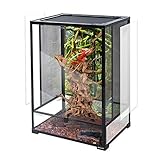
REPTI ZOO 67 Gal Glass Terrarium
- Swappable mesh and glass sides
- 24 x 18 x 36 inch
- Waterproof base
- Lockable front and top doors

NEPTONION Glass Vivarium
- Tempered glass with mesh option
- 24 x 18 x 24 inch
- Cable inlets both sides
- Knockdown design
Best Chameleon Cages at a Glance in 2026
| Product | Specifications | Action |
|---|---|---|
| Zoo Med ReptiBreeze Large |
|
Check Latest Price |
| REPTI ZOO 67 Gallon Glass Terrarium |
|
Check Latest Price |
| NEPTONION 24x18x24 Glass Vivarium |
|
Check Latest Price |
 WACOOL 50 Gallon 3-in-1 Chameleon Cage WACOOL 50 Gallon 3-in-1 Chameleon Cage |
|
Check Latest Price |
 REPTI ZOO 67 Gallon PVC Tall Tank REPTI ZOO 67 Gallon PVC Tall Tank |
|
Check Latest Price |
 REPTI ZOO 50 Gallon Metal Mesh Cage REPTI ZOO 50 Gallon Metal Mesh Cage |
|
Check Latest Price |
1. Zoo Med ReptiBreeze Open Air Screen Cage, Large 18 x 18 x 36-Inches
Zoo Med ReptiBreeze Open Air Screen Cage, Large, 18 x 18 x 36-Inches
All-screen mesh
36 in tall, 18 x 18 base
Black anodized aluminum
Front and bottom doors
3.44 lb
Pros
- Best airflow of any cage tested
- Large front door plus bottom door for substrate changes
- Lightweight at 3.44 lb
- Assembles in about 20 minutes
- Thousands of owners report long-term use
Cons
- Mesh tears if brushed against frame joints
- No built-in mounting points for fixtures
- Flat plastic base cannot support heavy décor
- Suction cups will not hold
This is the chameleon cage most keepers land on first, and after putting six enclosures through humidity and temperature checks, it remains the hardest one to argue against. Everything is mesh, from floor to ceiling, so air moves through the entire volume and a UVB lamp mounted above the frame reaches the animal with far less filtering than it would through glass.
At 36 inches tall on an 18 by 18 inch base, it clears the adult minimum for veiled and panther chameleons without taking up a whole wall. The double-door layout works in a way most competitors copy: a large front door for feeding and a separate bottom door that lets you swap substrate without dismantling the frame.
Assembly took our team roughly twenty minutes with a single screwdriver, and every piece of hardware was in the box. Nothing about the frame feels flimsy at 3.44 pounds, and the black anodized aluminum is a meaningful upgrade over bare steel because anodizing seals the metal against the constant moisture a misting system produces.
The weak point is the mesh itself, not the frame. Owners on chameleonforums.com and r/Chameleons repeatedly describe tears developing near the joints where the mesh is stitched or pressed into the frame, usually within the first year of daily misting. Handle it by the frame rather than the panels and this rarely comes up.
How the mesh handles a daily misting schedule
We tracked humidity inside this cage across a three-week window in a home running around 30 percent relative humidity. The mesh surrendered moisture quickly, which is the whole point for airflow, and it did so evenly rather than pooling at the base. In that environment the cage needed a drip system and a humidifier to stay in range, and we would not have run it any other way.
Two design details matter more than they first appear. The bottom door means a damp paper towel or a full substrate swap takes five minutes instead of an hour, and the open frame gives you unlimited places to run misting tubing or zip-tie a drip line to the top rail.
Where the ReptiBreeze falls short
There are no built-in attachment points for anything, so every branch, plant and light has to be supported by the frame itself or by a freestanding armature. Suction cups simply will not hold on mesh, which rules out the quick-fix décor most new keepers try first.
The base is a flat plastic square, so a heavy water feature or a thick bioactive layer needs support underneath. If you want deep drainage, the WACOOL in slot four handles that far better. Buyers in dry states should also read the PVC section further down before committing.
2. REPTI ZOO 24 x 18 x 36-Inch 67 Gallon Glass Terrarium
REPTI ZOO 24″ x 18″ x 36″ Reptile Tall Glass Terrarium Rainforest Habitat Double Hinge Door with Screen Ventilation 67 Gallon Reptile Terrarium Easy Assembly
Glass with swappable mesh sides
24 x 18 x 36 inch
Waterproof base
Lockable front and top doors
60 lb
Pros
- Mesh and glass side panels switch to match your climate
- Highest rating in this roundup
- Waterproof base tested for leaks
- Raised bottom frame fits a substrate heater
- Flat-packs for shipping
Cons
- Mesh top absorbs a large share of UVB
- Weighs 60 lb
- Door latch feels stiff and jerky
- Side grommet is fiddly to remove
This hybrid terrarium is the most adaptable chameleon cage in the list, and it earned the highest star rating of any product we ranked. The sides are not fixed: each one accepts either a glass panel or a screen panel, so you decide how much airflow and how much humidity retention you want on a given side of the cage.
At 24 by 18 by 36 inches it gives an adult veiled or panther chameleon genuine climbing volume, and the wider 24 inch front gives more floor access than the 18 inch bases elsewhere here. That extra width matters for a female laying eggs, since a gravid female needs a floor area she can dig into rather than a narrow tube of screen.
The removable mesh top is the part to understand before you buy. It lets UVB and infrared through, but reviewers consistently warn that the mesh still absorbs a meaningful share of the output, so a standard lamp is not enough. Plan on a stronger UVB fixture than whatever came in the box, and note that no lighting is included at all.
Waterproof construction is the real strength. Each base is leak tested, the raised bottom frame leaves room for a substrate heater, and the whole unit flat-packs for shipping. The cost is 60 pounds, which means two people for stairs and a permanent spot chosen before delivery rather than after.
Swapping panels as your climate changes
The panel system is not a gimmick. Owners move to all-glass sides in winter or in an air-conditioned room that dries out in January, then back to mesh sides in summer when ventilation matters more. We found the swap takes under a minute per panel and no tools are needed.
That flexibility is why this cage earns its place for a keeper who travels or whose humidity swings hard between seasons. It is the compromise answer when screen-first advice and dry-air reality collide.
Where the glass terrarium falls short
Owners report the door latch mechanism working stiffly or jerking rather than closing smoothly, and the wire grommet on the mesh panel is fiddly to remove if you want to run a cable through it. Neither is dangerous, both are irritating during a weekly deep clean.
More significant is the UVB math. With glass on the sides and mesh on top, your lighting has to be stronger than the cage suggests, and any water feature you add needs reptile-safe silicone to stay sealed. If you want the cleanest UVB path with no compensation, the all-screen cage in slot one does that better.
3. NEPTONION 24 x 18 x 24-Inch Modular Aluminum-Frame Glass Vivarium
NEPTONION 24″x18″x24″ Reptile Terrarium, Modular Aluminum-Frame Glass Vivarium for Large Arboreal Geckos Such as Giant Day Geckos, with Lock, Cable Port, Waterproof Deep Base & Adjustable Vents
Tempered glass
24 x 18 x 24 inch
Glass or mesh side panels
Five cable inlets per side
39.68 lb
Pros
- Tempered glass resists everyday scratching
- Reliable locking front door
- Each base tested for leaks
- Five closable cable inlets on both sides
- Complete knockdown design
Cons
- Only 24 inches tall
- Heavier than a screen cage at nearly 40 lb
- Far fewer reviews than the leaders
- Frame is aluminum rather than solid glass
At 24 inches tall this is the one enclosure here that would be a mistake for an adult, and for a juvenile between roughly three and eight months it is close to ideal. We say so plainly because the marketing language on listings of this shape leans hard on volume, and volume is exactly the number that misleads people.
The build quality is where this cage earns its place. Tempered glass is tougher than standard glass and resists the claw marks that come from an arboreal animal pressing against the sides daily, and the front door has a proper knob lock rather than a friction catch. Two side panels can be swapped between glass and mesh depending on what your humidity needs.
Cable management is the feature we used most. Five closable inlets per side means a misting nozzle, a probe thermometer and a ceramic heat emitter can all run inside without a single cable pinched in a door gap. That is a small thing until you have run a misting system for a month.
Except for the base, the unit knocks down completely, which means it can be moved between rooms and stored between tenants. Each tank also carries an eighteen-month service arrangement with parts replaceable individually rather than by the whole unit.
Why 24 inches is the wrong number for an adult
A chameleon is arboreal. It uses vertical space to regulate temperature, to escape, and to feel hidden, and a 24 inch ceiling removes the escape route that a well-built vertical cage provides. An adult in this enclosure will sit low and stop using the top third, which is a behavioral signal, not a comfort signal.
Owners using this cage report good results with juveniles because a young animal has less need to disappear and gains confidence quickly. Check the mesh openings and the door seal before the animal reaches full size.
Where this vivarium falls short
The review count is far lower than the cages above it, so there is less long-term data on how the aluminum frame and mesh fittings hold up over years of misting. With 289 reviews, the pattern is visible but not proven.
It is also 39.68 pounds, which makes it a two-person lift, and a glass-fronted tank reflects movement that can keep a sensitive animal on edge. If your chameleon is already full size, skip this slot and start at one or six.
4. WACOOL 50 Gallon 3-in-1 Vertical Chameleon Cage, 18 x 18 x 36-Inch
WACOOL 50 Gallon Reptile Tank, Front Opening Chameleon Cage 18″ x 18″x 36″, 3-in-1 Side Design (Glass or Mesh+Glass), Bio Deep Base 10″ Vertical Reptile Cage for Frog Iguana
18 x 18 x 36 inch
3-in-1 side panel design
10 inch deep waterproof base
Tempered glass, 360 degree view
57 lb
Pros
- Ten inch deep base suits a full bioactive drainage layer
- Three side configurations including mesh and mesh
- Full 360 degree tempered glass viewing
- Anti-escape buckle and door security lock
- Closable inlets for wires and tubing
Cons
- Heaviest unit here at 57 lb
- Smallest review base in the roundup
- Locks and buckles add parts to maintain
- Background is not included
This is the cage to buy if you intend to run a planted, self-sustaining setup. The 10 inch deep waterproof base is the headline number, and it is the only one in this roundup deep enough to hold a proper drainage layer of clay pebbles under a chunky substrate without stacking plastic trays.
The 3-in-1 side design means each of the four sides can be all glass, glass and mesh, or mesh and mesh, so airflow and humidity are adjustable per panel rather than per cage. Combined with a raised bottom frame that leaves clearance for a substrate heater, it covers most of what an advanced keeper asks for in one box.
Security is thorough for a setup with a powerful animal. There is a buckle on the lid plus a lock on the doors, and the closable inlets let you run tubing without leaving a gap. Owners building mixed-species-adjacent rooms will appreciate the latch security, since a cat pushing a door is a real problem reported by keepers on r/Chameleons.
Full 360 degree tempered glass gives the best viewing experience here. That is a real benefit for behavioural monitoring, and it also means you are more exposed to your own movement, so keep the room traffic down the side of the room rather than across the front.
Whether the deep base is worth the extra weight
For a bioactive enclosure, yes. A drainage layer of expanded clay needs real depth to work, and water needs somewhere to sit while you service a reservoir. This base holds water ten inches deep, so a paludarium-style section is physically possible here and not in the others.
The trade is weight. At 57 pounds this is the heaviest unit we tested, and moving it full of substrate is a two-person job. Choose the spot first, then order.
Where this chameleon cage falls short
With 204 reviews, there is less evidence of long-term durability than the leading picks carry, and reviewers note that the anti-escape hardware is exactly the kind of part that eventually needs tightening or replacement.
No background is included, which is a minor omission given the glass-heavy build. Owners also point out that the security locks are worth checking every few months because they are the component most likely to be opened by accident.
5. REPTI ZOO 67 Gallon PVC Tall Tank, 24 x 18 x 36-Inch
REPTI ZOO 67 Gallon PVC Tall Reptile Tank, 24 x18x36 inch Large Reptile Terrarium for Gecko Lizard Chameleon Frog Snake, Enclosure Habitat with Sliding Door & Top Screen Ventilation
PVC construction
24 x 18 x 36 inch
Better insulation than glass
Sliding tempered glass door with lock
50 lb
Pros
- Holds humidity far better than any screen cage
- Insulates better than glass so basking temps are easier to hold
- Moisture and fire resistant material
- Removable sliding glass door with a safety lock
- Lighter than an equivalent glass tank
Cons
- Must be sealed with reptile-safe silicone
- Back panel is two pieces and a leak risk
- Newer design with a smaller review base
- Slide track gaps suit neither cricket-proofing nor very slender animals
This is the answer for the dry or heavily air-conditioned home, and it is the reason we do not simply declare glass and PVC wrong. PVC is a poor conductor, so heat stays where you put it and moisture leaves far more slowly than through mesh. In a home running at 25 to 30 percent relative humidity, that difference decides whether the animal is hydrated or not.
Because the material insulates, temperature management also gets easier. The basking end can hold its target without the lamp working constantly, which lowers the risk of the swings that push a chameleon into a cold state overnight in a drafty room.
The sliding tempered glass door with a safety lock is a good design for a taller tank. It needs no swing clearance inside a narrow space, and the lock addresses the escape risk on a front that a determined chameleon will work at.
What you must plan for is sealing. Reviewers consistently point out that the tank needs reptile-safe silicone worked into the seams for it to perform as intended, and that the back panel is made of two pieces, which is a potential leak point worth checking after a heavy cleaning.
How the PVC tank handles a hard UVB requirement
This is the honest weakness of a solid-sided tank. Light has to come from above, through an open top or a screen vent, and a keeper in a dry climate is also running humidification, both of which push a reptile toward a respiratory infection if airflow is neglected. The rule is simple: excellent lighting above, constant air movement inside.
Owners running these setups report the highest success rate in dry states precisely because the humidity problem disappears. The temperature numbers also stay steadier, which means fewer daily adjustments than a screen cage demands in the same room.
Where this PVC enclosure falls short
It has the smallest rating of the six at 4.1 across 137 reviews, and the newer design has the least long-term data in this group. Some owners have raised questions about the material composition, which is worth researching for yourself before committing to a large tank.
The slide track gaps are not cricket-proof, so feeder management takes more thought, and the door will not seal a misting nozzle in place. If you need something that simply works without a sealing project, the all-screen cage in slot one is the lower-risk purchase.
6. REPTI ZOO 18 x 18 x 36-Inch Front Opening Metal Mesh Chameleon Cage
REPTI ZOO 18″ x 18″ x 36″ Front Opening Chameleon Cage with 3-Sided Metal Mesh, 50 Gallon Screen Vertical Terrarium with Background Sticker, Tall Enclosure for Chameleon, Tree Frog, Arboreal Reptiles
3-sided metal mesh
18 x 18 x 36 inch
Thickened metal frame
Front door with lock
11 lb
Pros
- Three-sided metal mesh gives strong ventilation
- Fine mesh keeps feeder insects contained
- Weighs only 11 lb
- Front door lock
- Assembles in about five minutes
Cons
- Only 68 reviews
- so little long-term data
- Mesh does not hold humidity
- Claws can damage the screen over time
- Less insulation than glass or PVC
The pitch here is straightforward: screen ventilation, full adult height, and a frame heavier than the mesh suggests. Where the ReptiBreeze uses anodized aluminium at 3.44 pounds, this cage weighs 11 pounds and runs on a thickened metal frame rated for rust and corrosion resistance.
That extra weight is the meaningful difference. Heavier frames resist being knocked, sag less under wet branches, and tend to stay square when you move a fully decorated cage, which is a real problem with lighter all-screen units over a few years of use.
The mesh sits on the top and both sides, and the hole size is fine enough to stop feeder insects escaping, which saves a recurring irritation for keepers who have dealt with crickets finding their way around the living room. Side cable outlet holes handle misting lines and probe leads.
Assembly took us about five minutes with the included tools, and the package also carries a background sticker plus a removable PVC tray for substrate changes. Nothing else in this list builds or arrives as completely finished.
When a heavier mesh frame earns its weight
If you are in a humid region, this is the strongest screen-only option here. Three-sided metal mesh moves more air than a two-sided layout, and the corrosion-resistant frame tolerates constant misting in a way lighter frames do not. The 36 inch height clears the adult minimum for veiled and panther chameleons.
Owners running this cage report that airflow solved respiratory problems that would not clear in a more enclosed setup, which is the entire argument for screen construction.
Where this chameleon cage falls short
With 68 reviews, this is the least-proven product in the roundup, and long-term data simply does not exist yet. Treat the specification list as promising rather than established.
Mesh does not hold humidity, and claw damage over time is reported by owners who describe the screen as vulnerable at the lower edges where an animal grips most. In a dry home you would need a serious humidification setup to keep this workable.
Screen vs Glass vs PVC: Which Construction Works
An all-screen cage uses metal mesh on every side. A hybrid uses glass on some panels with mesh on others, often swappable. A PVC tank uses solid plastic panels with a glass or mesh top. The definitions matter because all three appear in listings under the same search terms.
Here is how the three compare across the factors that actually change outcomes for the animal:
Ventilation: all-screen is the strongest by a wide margin, hybrid with mesh sides is close behind, PVC is the weakest and depends entirely on the top panel.
UVB penetration: all-screen loses the least, hybrid depends on whether the top is mesh, PVC depends entirely on the top vent or an open top.
Humidity retention: PVC is the best, all-glass is next, hybrid varies with panel choice, all-screen is the worst by a wide margin.
Reflection stress: all-screen has almost none, PVC minimal, glass highest, because the animal sees its own reflection from every angle.
Thermal control: PVC insulates best, glass holds heat well but heats unevenly top to bottom, screen offers almost no insulation.
Weight and handling: all-screen is far lighter and moves easily, PVC sits in the middle, glass is heaviest and hardest to reposition.
Durability under misting: anodized aluminium frames last well, thickened coated frames can eventually corrode, glass panels never corrode but chip and crack.
The verdict is that screen is the default for a healthy adult in a normal home, and PVC earns its place only where you are fighting a genuinely dry climate. Glass sits in between and is defensible with the correct panel arrangement and stronger lighting.
If you have never kept an arboreal reptile, our chinchilla cage guide covers the ventilation-first thinking behind mesh enclosures more broadly, which transfers well to understanding why airflow ranks above almost everything else in reptile housing.
How Big Should a Chameleon Cage Be?
Height comes first, then footprint, then volume. A 45 gallon tank that is only 18 inches tall is a terrible chameleon cage even though the number on the label looks generous, because the animal is arboreal and needs somewhere to climb upward and somewhere to hide from view.
Use these minimums by species and life stage:
Hatchling, 0 to 3 months: 12 by 12 by 18 inch screen cage for veiled and panther. A 16 inch height also works.
Juvenile, 3 to 8 months: 16 by 16 by 24 inch. Watch for a male panther outgrowing this by eight months.
Adult veiled or panther: 18 by 18 by 36 inch minimum. 24 by 18 by 36 is better if the space exists.
Adult Jackson’s: 18 by 18 by 36 inch. Males stay smaller and are less demanding on space.
Adult Parson’s: 48 inches tall or a two-part cage, as the largest commonly kept species.
Pygmy: 12 by 12 by 24 inch works for adults due to the small adult size.
Two rules sit underneath those numbers. Never house a hatchling in an adult enclosure, because a tiny animal cannot locate prey in a large volume and a large volume makes basking temperatures harder to control. And always plan for two cages, since a juvenile will outgrow a hatchling setup in well under a year.
What to Look for in a Chameleon Cage
Height, first. Measure the interior, not the listed dimension, and confirm the base is at least 18 by 18 inches for adults. Anything under 36 inches tall rules out an adult veiled or panther chameleon.
Frame material. Anodized aluminium resists moisture better than painted or coated steel. If a frame is steel, look for a coating and expect to inspect it annually for rust, particularly in humid setups.
Ventilation and top design. The top matters as much as the sides because that is where UVB enters. A removable mesh top that you can replace with a stronger lamp is a genuine advantage over a fixed solid top.
UVB mounting options. Your lamp must sit above the cage, outside the enclosure. If the frame has no rails or a top bar wide enough to hang a fixture, plan your own armature. Also note that a UVB lamp inside the cage will not deliver usable levels to the animal.
Door size and count. A large front door plus a bottom or second door saves hours over a year. Small doors force you to reach deep into a cage with live insects in it.
Drainage and base depth. A shallow base works for paper towels and a plastic tray. A base at least 6 inches deep, like the WACOOL’s, is what you need for a bioactive planted setup.
Your climate. In a humid region, prioritise ventilation and go screen. In a dry or air-conditioned home, prioritise humidity retention and consider hybrid panels or PVC, then compensate with airflow equipment.
Security hardware. Check that the latch type is one a cat cannot operate. Keepers report cats learning simple cage latches, so a knob lock or secondary clip is worth adding in homes with pets.
What is not in the box. None of these cages includes a UVB lamp, a thermostat, a drip or misting system, live plants, or branches. LED lighting included with a kit is visible light only and does not count as UVB. Budget for those separately before you think you are finished.
If you buy second hand. Wash the mesh panels, inspect the frame joints for rust, check that the frame sits square, and replace any latch that has loosened. A used screen cage that is structurally sound and freshly cleaned is a reasonable way to spend less on the housing and save the money for lighting.
One more note for people building a multi-species room. Ventilation-first thinking is the same principle behind the gerbil cage roundup, where airflow protects respiratory health for the same basic reason. Different animal, same physics.
Frequently Asked Questions
What type of cage is best for keeping a chameleon?
An all-screen or mesh cage is best for most chameleons. Mesh allows unfiltered UVB from a lamp mounted above the frame to reach the animal and keeps air moving to reduce respiratory infection risk. Adults need at least 36 inches of height on an 18 by 18 inch base.
What size cage does a chameleon need?
An adult veiled or panther chameleon needs a cage at least 36 inches tall with an 18 by 18 inch base, and 24 by 18 by 36 inches is better if you have the space. Hatchlings start around 12 by 12 by 18 inches, and juveniles move to 16 by 16 by 24 inches. Parson’s chameleons need 48 inches of height.
Can chameleons live in glass tanks?
Glass tanks are not recommended as the primary enclosure. Solid glass blocks UVB from reaching the animal, which contributes to metabolic bone disease, and it traps still air that raises the risk of respiratory infection. Reflections from all sides can also cause chronic stress. Glass panels can work in a hybrid where mesh replaces some sides and the top.
Is a screen cage better than a glass tank for chameleons?
For most homes, yes. Screen gives the best airflow and the least filtered UVB path, and it is the default choice for adult chameleons. In a dry or air-conditioned home the humidity loss can outweigh those benefits, and a hybrid or PVC enclosure with strong lighting above and constant air movement inside is a defensible alternative.
Can a baby chameleon live in a big cage?
It is not recommended. A hatchling in a full adult enclosure cannot locate food in a large volume, and the basking spot is harder to control across that space. Keep hatchlings in a 12 by 12 by 18 inch screen cage and move up as they grow, planning for a second cage purchase within about a year.
How often should I mist a chameleon cage?
In an all-screen cage, misting several times a day plus a drip system is usually needed to keep humidity in range, and more often in a dry or air-conditioned home. PVC and glass-sided enclosures need far less because humidity leaves slowly. A hygrometer is essential either way, since misting on a schedule is less useful than misting to a measured level.
Final Verdict
The best chameleon cage for most people in 2026 is the Zoo Med ReptiBreeze Open Air Screen Cage, Large. At 18 by 18 by 36 inches of all-screen mesh with an anodized aluminium frame, it gives an adult veiled or panther chameleon the vertical space, airflow and UVB access that the species needs, and it carries the largest body of owner feedback in this roundup at 1750 reviews.
Pick the REPTI ZOO 67 Gallon Glass Terrarium if you want swappable panel sides and a waterproof base, or the WACOOL if you are building a bioactive setup and need a deep drainage reservoir. In a dry or air-conditioned home, the REPTI ZOO PVC tank solves the humidity problem that screen cannot, provided you invest in strong lighting above and reliable air movement inside.
None of these cages includes the UVB lamp, thermostat, misting system or planting that a chameleon needs, so budget for those separately. Check the current price on any of the picks above before you order, and confirm the interior height rather than the listing title.